
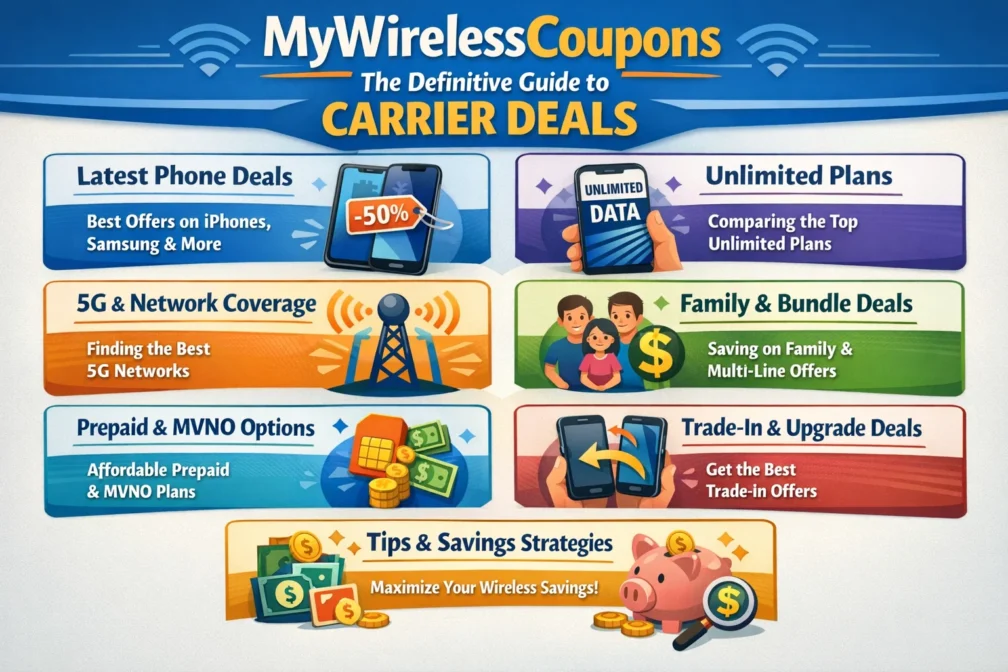

topics mywirelesscoupons;In today’s hyper-connected world, our smartphones are essential lifelines, but the monthly bills that accompany them can be a significant financial strain. Navigating the complex landscape of wireless carrier plans, device promotions, and hidden fees requires a savvy approach. This is where leveraging resources for topics mywirelesscoupons becomes an indispensable financial strategy.
This comprehensive guide is designed to transform you from a passive bill-payer into an empowered consumer, adept at unlocking substantial savings on your wireless service. We will delve deep into the ecosystem of wireless discounts, from understanding carrier tactics to mastering coupon aggregation sites and formulating a personal savings plan that works for the long term. Consider this your masterclass in cutting your cell phone bill without cutting corners on service.
Understanding the Wireless Savings Landscape
The market for wireless service is fiercely competitive, which is a significant advantage for consumers willing to do their homework. Carriers are in a constant battle to acquire new customers and retain existing ones, leading to a perpetual stream of promotions, limited-time offers, and bundled discounts. However, these offers are rarely advertised universally or simply; they are strategically deployed through partner channels, loyalty programs, and targeted marketing. Understanding this landscape is the first step toward consistent savings. Resources dedicated to topics mywirelesscoupons serve as navigational tools in this complex environment, aggregating opportunities that would otherwise be fragmented and difficult to track.
To effectively tap into this savings stream, you must think beyond a single transaction. Wireless savings encompass a holistic strategy involving your service plan, your device, your add-ons, and even your payment method. It’s about aligning your actual usage with a plan that doesn’t overcharge for unused data, combining service with other utilities for bundle discounts, and timing your device upgrades to coincide with the most lucrative trade-in offers. A piecemeal approach might save you $10 one month, but a strategic understanding of the landscape can save you hundreds annually. This guide will unpack each of these layers, providing you with the knowledge to build a comprehensive savings framework.
Decoding the Different Types of Wireless Discounts
Not all wireless discounts are created equal, and knowing the difference is key to applying them effectively. Broadly, discounts fall into several categories: plan-specific promotions, device-specific offers, bundled service discounts, loyalty/seasonal sales, and partner or affinity group reductions. Plan promotions might include “switch to us and get 50% off for six months” or “unlimited lines for $25 each.” Device offers are the classic “get the latest smartphone for $0 down with trade-in” deals. Bundled discounts reward you for combining wireless with internet, TV, or streaming services from the same parent company.
Furthermore, discounts can be applied in various ways. Some are instant rebates at point of sale, others are bill credits spread over 24 or 36 months, and some are straightforward percentage or dollar reductions on your monthly service charge. A critical piece of advice is to always read the fine print. A bill credit that requires 36 months of service is a long-term commitment, and a device discount that voids if you change your plan can become a trap. When researching topics mywirelesscoupons, pay close attention to the structure and requirements of each offer. This discernment ensures the discount serves your financial goals rather than locking you into an unfavorable arrangement.
The Role of Coupon and Deal Aggregation Sites
This is where dedicated websites and forums become powerful allies. Platforms that focus on topics mywirelesscoupons perform the invaluable service of scouring the internet, carrier emails, and retail partners to consolidate available offers in one place. They save you countless hours of research. These sites range from broad deal forums where users share findings to specialized blogs that analyze the true value of a carrier’s promotion. Their curators often have insider knowledge on stackable discounts or unadvertised promo codes that can be applied at checkout.
However, not all aggregation sites are equal in reliability. The most authoritative ones provide clear dates, source their offers, and have active communities that verify success. They also categorize deals effectively—separating new customer offers from loyalty upgrades, or highlighting exclusive discounts for students, military personnel, or employees of certain companies. As industry expert Lisa Fernandez notes, “A reputable coupon aggregator doesn’t just list codes; it provides context. It tells you if a ‘free phone’ deal requires an expensive unlimited plan, or if a loyalty discount can be combined with a trade-in. That context is what turns a lead into real savings for the consumer.” Using these sites as a starting point for your research, rather than a final answer, is the mark of a savvy shopper.
Strategic Timing for Maximum Savings
In the wireless industry, timing isn’t everything—it’s the only thing. Carriers operate on quarterly and annual sales cycles, creating predictable patterns for when the best deals emerge. The most prominent sales events are tied to major holidays: Black Friday, Cyber Monday, and the December holiday season traditionally offer some of the most aggressive device promotions and plan discounts of the year. Similarly, back-to-school season in late summer often features deals aimed at students and families. New device launches, particularly for flagship iPhones and Samsung Galaxy models, trigger competitive trade-in offers from all major carriers.
Beyond holidays, understanding carrier fiscal cycles can be beneficial. The end of a financial quarter (March, June, September, December) can sometimes yield targeted promotions as companies strive to meet subscriber growth targets. If your goal is to purchase a device, avoid buying it shortly after launch unless a generous trade-in is offered; prices on devices themselves typically drop as the model year progresses. For plan savings, keep an eye on when carriers introduce new plan structures, as they may offer incentives to switch to them. Aligning your research on topics mywirelesscoupons with these cyclical patterns dramatically increases your chances of capturing a top-tier offer.
Navigating Carrier-Specific Promotions and Pitfalls
Each major carrier—Verizon, AT&T, and T-Mobile—has its own playbook for promotions, and their internal systems for applying discounts vary widely. Verizon frequently utilizes bill credits spread over 36 months and often requires specific, premium unlimited plans to qualify for their best device deals. AT&T has historically been strong with bundle discounts (e.g., wireless plus fiber internet) and offers substantial discounts for members of certain professions like nurses, teachers, and military. T-Mobile often promotes “all-in” pricing with taxes and fees included and runs aggressive “switch and get paid” campaigns to cover competitor early termination fees.
The pitfalls are as distinctive as the promotions. A common issue is the “plan lock,” where a device discount is voided if you downgrade your service plan, effectively forcing you to maintain a high-cost plan for three years. Another is the “activation fee waiver,” which is sometimes offered as a promo code but must be applied at the right moment in the checkout process. Also, beware of “free line” promotions that are only free if you keep all other lines active, potentially preventing you from canceling an unused line later. Scrutinizing the terms associated with carrier-specific topics mywirelesscoupons is non-negotiable to avoid these costly traps.
The Insider’s Guide to Stacking Discounts
The holy grail of wireless savings is discount stacking—combining multiple promotions to achieve unparalleled value. While carriers often state “cannot be combined with other offers,” there are legal and strategic ways to layer savings. The most common stack involves a device promotion (e.g., $800 off with trade-in) plus a service discount (e.g., a 20% teacher discount or a “third line free” offer). These are often compatible because one targets the device financing and the other targets the monthly service charge.
Other stacking opportunities include using a cashback portal (like Rakuten or TopCashback) in conjunction with a carrier promotion, applying a waived activation fee code on top of a sale price, or leveraging a referral credit from a friend after you’ve secured a new customer deal. The key is understanding the hierarchy of discounts. Typically, percentage-off service discounts apply to the base plan cost before add-ons. Device credits are applied to your equipment installment plan. The table below illustrates a hypothetical but realistic example of effective discount stacking for a new customer.
Table: Example of Stacking Wireless Discounts for a New Customer
| Discount Layer | Offer Details | Impact on Bill |
|---|---|---|
| Base Plan | Carrier’s Premium Unlimited Plan for 2 lines | $120.00 / month |
| Service Promotion | “Third Line Free” Promotion | Adds a line; net cost stays ~$120 |
| Affinity Discount | Employer/Association 15% Service Discount | -$18.00 / month |
| Device Promotion | “$800 off Latest Smartphone” via 24-mo bill credits | -$33.33 / month (credit) |
| Cashback Portal | 10% Cashback on New Activation | One-time $36 cashback |
| Activation Fee | Waiver Promo Code Applied at Checkout | One-time $70 saved |
| Effective Monthly Cost | For 3 lines + a new premium device | ~$68.67 |
Mastering the Art of the Negotiation and Retention Call
Many consumers overlook the most direct path to savings: simply asking for it. If you are an existing customer, the retention or loyalty department holds powers that frontline sales agents do not. Preparing for this call is crucial. Before dialing, research your topics mywirelesscoupons for current competitor offers. Know exactly what a rival carrier would give you to switch. Also, review your own account history—your tenure and payment record are leverage.
During the call, be polite but firm. State that you are considering leaving due to cost and mention the specific competitor offer. Ask directly, “What can you offer me to stay?” The goal is to be transferred to the retention team. Possible outcomes include a direct monthly bill credit for 6-12 months, a plan downgrade to a cheaper tier that still meets your needs, a waived upgrade fee, or access to a loyalty plan no longer advertised. This strategy often yields better results for long-term customers than any publicly available coupon.
Beyond the Bill: Saving on Devices and Accessories
Wireless savings extend far beyond your monthly service charge. The cost of the device itself is often the largest single expense. The most effective strategy here is to decouple device ownership from carrier financing when possible. Consider purchasing a quality refurbished or previous-generation model from a reputable dealer, then bringing it to a carrier with a competitive BYOD (Bring Your Own Device) plan discount. This avoids the restrictive bill credit agreements altogether.
For accessories like cases, screen protectors, and chargers, never buy them at the carrier store. Prices are notoriously inflated. Instead, use the same coupon and deal aggregation principles. Websites dedicated to electronics deals often have promo codes for major accessory brands. Furthermore, consider third-party accessories from highly-rated brands on Amazon; they often provide 90% of the quality at 50% of the price. Integrating device and accessory savings into your overall research on topics mywirelesscoupons completes the picture of total cost reduction.
Utilizing Employer, Student, and Affinity Programs
This is one of the most underutilized avenues for consistent, permanent savings. Nearly all major carriers offer ongoing discounts for members of specific groups. These are not fleeting coupons but enduring percentage reductions on your monthly service bill. The most common are:
- Employee Discounts: Many corporations, healthcare systems, and government agencies have negotiated rates with carriers. Check your internal HR portal.
- Student/Military/First Responder Discounts: These are often publicly advertised but require verification (e.g., a
.eduemail or ID verification). - Association Discounts: Members of certain organizations (e.g., AAA, AARP, credit unions) may qualify.
The savings typically range from 10% to 25% off the base service plan. Crucially, these discounts can usually be combined with device promotions, as they apply to the service portion of your bill. The verification process can be done online, and once applied, the discount continues for as long as you remain eligible. It’s a set-and-forget component of your savings strategy that should be one of the first things you explore.
Future-Proofing Your Savings Strategy
The wireless industry is not static. Technologies like 5G expand, new plan structures emerge, and consumer habits shift. To future-proof your savings, adopt a mindset of annual review. Once a year, conduct a full audit of your wireless service. Analyze your actual data usage over the past 12 months—are you consistently under your limit, suggesting you could downgrade? Check if your affinity discounts are still active. Research current market rates and promotions.
Set calendar reminders for key shopping periods like Black Friday. Build a relationship with a trusted sales representative at a corporate-owned carrier store, who might alert you to pre-release offers. Subscribe to notifications from your favorite deal aggregation sites that cover topics mywirelesscoupons. By institutionalizing this review process, you ensure that your savings adapt with the market, preventing you from languishing on an outdated, overpriced plan for years. This proactive habit guarantees that your wireless service remains a tool of value, not a financial burden.
Conclusion
Mastering the world of wireless savings is an empowering financial skill in our digital age. It moves beyond sporadic coupon clipping to a strategic understanding of carrier economics, promotional cycles, and personal usage. By leveraging resources dedicated to topics mywirelesscoupons, timing your purchases, learning to stack discounts, and fearlessly negotiating, you can routinely save hundreds of dollars per year. Remember, the goal is not just to find a single deal, but to build a sustainable, low-cost relationship with a service you depend on every day. Start with an audit of your current bill, explore your eligibility for permanent affinity discounts, and mark your calendar for the next major sales cycle. Your wallet—and your smartphone—will thank you.
Frequently Asked Questions (FAQ)
What is the most reliable way to find current wireless coupons?
The most reliable method is to use established, reputable deal aggregation websites and forums that specialize in consumer tech and wireless offers. These sites actively monitor carrier announcements, retail partners, and user submissions. For the most authoritative information, always cross-reference any great deal you find on these sites with the official carrier’s promotions page to confirm terms and availability. This dual-check approach is central to effective research on topics mywirelesscoupons.
Can I use new customer coupons if I’m already with a carrier?
Typically, the most lucrative promotions are explicitly for new customers (often defined as new lines of service). However, as an existing customer, you can often access comparable “loyalty” offers by contacting the retention department. Furthermore, some promotions for new devices or plan upgrades are available to all. Your best strategy is to search for offers tagged for “existing customers” on coupon sites or to use competitor offers as leverage in a negotiation call with your current provider.
How do I avoid scams when looking for wireless coupon codes?
Avoid any site that asks for your social security number, carrier account password, or excessive personal information to “generate” a coupon. Stick to well-known, community-vetted deal forums and major tech blogs. Be skeptical of codes shared on obscure social media pages. A legitimate promo code for topics mywirelesscoupons will be applied at the carrier’s official checkout, and its terms will be clearly documented on the carrier’s own website.
Do wireless coupons work for prepaid plans as well as postpaid?
Yes, but the landscape is different. Prepaid carrier promotions (from providers like Mint Mobile, Visible, or carrier prepaid brands) more often involve direct discounts on plan refills, multi-month bundle pricing (e.g., “buy 3 months, get 3 free”), or discounted SIM starter kits. These are frequently found on the same deal aggregation sites. The savings on prepaid can be more straightforward, often involving lower upfront costs rather than complex bill credit structures.
What should I do if a coupon or promotion doesn’t apply correctly to my bill?
Act immediately. Contact customer support, preferably via chat or phone, and have all relevant documentation ready: the promo code, the terms of the offer as advertised, and your order confirmation. Be polite but persistent, asking for a supervisor or the loyalty department if the frontline agent cannot resolve it. Many issues with topics mywirelesscoupons related to bill credits can be fixed manually by the carrier’s system, but it requires prompt attention before billing cycles close.