
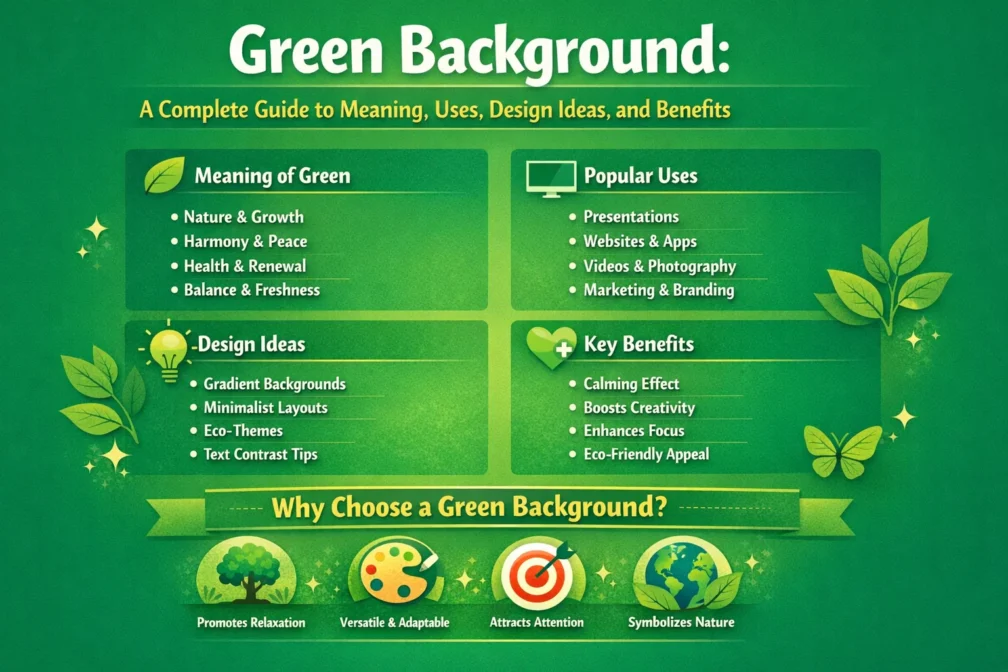

A green background is one of the most popular and powerful design choices in the world of art, photography, websites, and presentations. From nature-themed designs to professional branding, the color green brings a sense of balance, freshness, and life. When people see a green background, they often think of forests, plants, health, and growth. Because of this natural connection, designers, marketers, and artists frequently use green backgrounds to create calming and positive visual experiences.
In today’s digital world, the use of a green background has grown even more. You will see it in social media posts, website layouts, classroom presentations, and video production. Even movie studios use green backgrounds for special effects. It’s a simple color, yet it carries deep meaning and practical uses.
This complete guide will help you understand everything about a green background. You will learn what it means, where it is used, how to design with it, and why it remains such a powerful design element.
What Is a Green Background?
A green background simply means a surface, screen, or design area that uses green as the main color behind other elements. It can appear in many forms such as:
- Website backgrounds
- Photo backgrounds
- Video production screens
- Graphic design layouts
- Presentation slides
- Wallpapers and digital art
The shade of green may vary. Some backgrounds use light green, while others use dark or neon green.
A can be:
- Solid color
- Gradient color
- Patterned design
- Nature-themed with leaves or plants
- Textured or artistic
No matter the style, the goal is the same: to create a pleasing visual base for the content placed on top.
The Meaning and Psychology of a Green Background
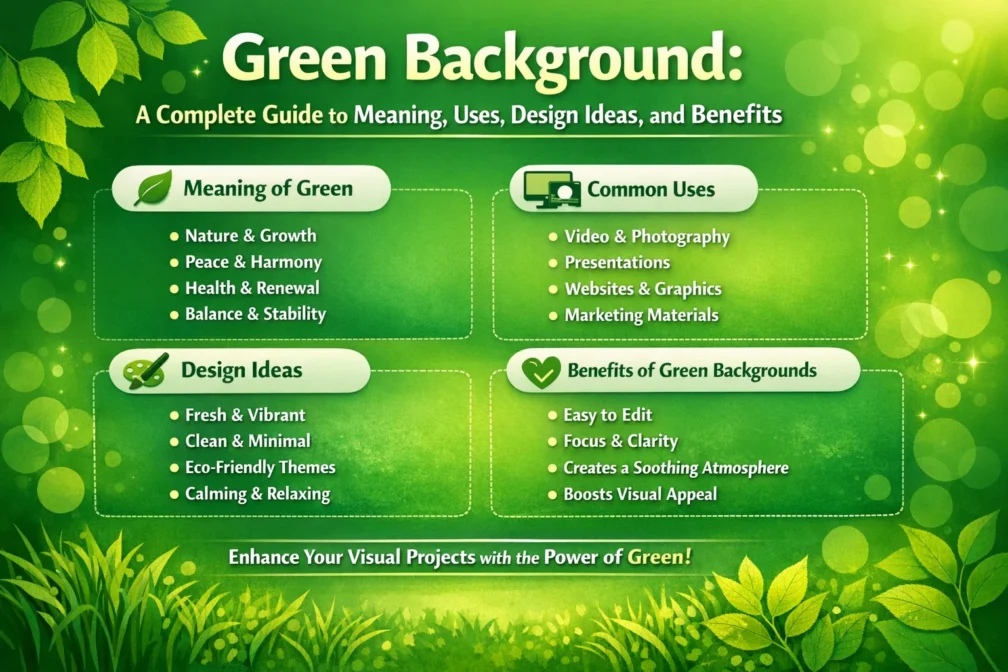
Color psychology plays an important role in design. The is strongly connected with nature and emotional balance.
People often associate green with:
- Growth
- Health
- Freshness
- Peace
- Harmony
- Wealth
- Renewal
Because of these meanings, a green background can make viewers feel relaxed and comfortable.
Emotional Effects of Green
Here are some common emotional responses people have when they see a :
- Calmness: Green is gentle on the eyes.
- Hope: It represents new beginnings.
- Safety: Many medical and environmental brands use green to show trust.
- Energy: Bright green can create excitement and freshness.
For example, hospitals, health products, and organic food brands often choose a green background because it signals health and natural quality.
Popular Shades Used in a Green Background
Green comes in many different shades. Each shade creates a slightly different mood.
| Shade of Green | Description | Common Use |
|---|---|---|
| Light Green | Soft and refreshing | Wellness websites |
| Lime Green | Bright and energetic | Youth marketing |
| Emerald Green | Rich and elegant | Luxury branding |
| Forest Green | Deep and natural | Nature themes |
| Olive Green | Calm and mature | Military and vintage designs |
| Mint Green | Gentle and modern | Beauty and lifestyle brands |
Choosing the right shade helps a green background match the message of the design.
Common Uses of a Green Background
A appears in many fields and industries. Its flexibility makes it useful for both creative and professional work.
Website Design
Many websites use s because they:
- Look clean and natural
- Reduce eye strain
- Create a welcoming feeling
Eco-friendly companies often choose a to highlight their commitment to the environment.
Social Media Graphics
Designers use green backgrounds for:
- Instagram posts
- YouTube thumbnails
- Facebook banners
- Online advertisements
The color helps graphics stand out in crowded feeds.
Photography
Photographers use s for portraits and product photos. A can create a fresh and natural atmosphere.
Video Production
In filmmaking, a special type of called a green screen is used to replace the background digitally.
This technique allows creators to add:
- Different locations
- Animated scenes
- Weather effects
- Fantasy environments
Why Designers Love Using a Green Background
Design professionals often choose a because it provides many benefits.
Visually Comfortable
Green is easy on the eyes. Long reading or viewing sessions feel less tiring with a soft
Green instantly reminds people of nature and the outdoors. This makes designs feel organic and healthy.
Flexible Color Pairing
A works well with many other colors, such as:
- White
- Black
- Yellow
- Gold
- Brown
- Blue
Because of this flexibility, designers can create many different styles.
Positive Brand Image
Brands that want to appear:
- eco-friendly
- healthy
- trustworthy
often choose afor their visual identity.
Tips for Designing with a Green Background
Using a successfully requires thoughtful design choices. Here are some helpful tips.
Choose the Right Shade
Different projects need different shades.
- Light green for soft and friendly designs
- Dark green for professional or luxury themes
- Bright green for energetic marketing
Maintain Good Contrast
Text must be easy to read on a .
Best combinations include:
- White text on dark green
- Black text on light green
- Gold accents on emerald green
Avoid Overusing Green
While green is beautiful, too much of it can feel overwhelming. Designers often balance a with neutral colors.
Use Natural Elements
Adding natural graphics enhances the effect of a . For example:
- leaves
- grass textures
- plant illustrations
- eco icons
These details strengthen the nature theme.
Green Background in Branding and Marketing
Marketing experts understand the power of color. A can influence how customers see a brand.
Many successful brands use green because it suggests:
- sustainability
- freshness
- growth
- financial success
Banks sometimes use green because it symbolizes money and stability.
Industries That Often Use Green
Some industries frequently rely on a :
- Organic food brands
- Environmental organizations
- Health and wellness companies
- Gardening businesses
- Financial services
These businesses want customers to feel confident and secure.
Green Screen Technology and the Green Background
One of the most fascinating uses of a is in film and television production.
A green screen is a bright used to replace scenes digitally.
How Green Screen Works
The process is called chroma keying. It works like this:
- Actors stand in front of a .
- Cameras record the scene.
- Editing software removes the green color.
- A new background is added.
This technique allows filmmakers to create amazing scenes.
Examples include:
- space environments
- fantasy worlds
- city skylines
- underwater scenes
Without the , many modern movies would be impossible to create.
Creative Design Ideas Using a Green Background
Designers love experimenting with s in creative ways.
Nature-Inspired Designs
These designs include:
- leaves and plants
- forest scenery
- tropical patterns
They work well for eco-friendly brands.
Minimalist Designs
A simple green background with white text creates a clean, modern look.
Minimalist designs often use:
- soft gradients
- large typography
- simple icons
Luxury Green Themes
Dark emerald green combined with gold elements creates a premium appearance.
Luxury brands sometimes use this style for:
- fashion websites
- jewelry brands
- high-end packaging
Abstract Art Backgrounds
Artists may create abstract green backgrounds with:
- paint splashes
- geometric shapes
- digital textures
These designs look creative and unique.
Mistakes to Avoid When Using a Green Background
Even though green is versatile, designers should avoid some common mistakes.
Poor Color Contrast
Text that blends into the background becomes hard to read.
Too Many Shades
Using too many green tones can make the design confusing.
Ignoring the Audience
Different audiences respond differently to color choices.
For example:
- Children prefer bright green
- Professionals may prefer dark green
Overly Bright Colors
Extremely bright green can strain the eyes if used too much.
A balanced green background always feels better.
The Future of the Green Background in Design
Design trends change often, but the green background continues to grow in popularity.
Several modern trends support this.
Eco-Friendly Design Movement
As people care more about the environment, green-themed designs are becoming more popular.
Minimalist Web Design
Clean layouts often use soft green backgrounds to create relaxing digital spaces.
Sustainable Branding
Companies want to appear environmentally responsible, so green backgrounds help communicate this message.
Digital Wellness
Many designers now focus on reducing screen fatigue. Green is one of the most comfortable colors for long viewing.
Because of these trends, the green background will likely remain a favorite design element for many years.
Final Thoughts on Green Background
The green background is much more than a simple color choice. It carries deep meaning, powerful symbolism, and practical design benefits. Whether used in website design, photography, branding, or video production, green backgrounds create calm, natural, and trustworthy visual experiences.
From soft mint tones to rich forest shades, the versatility of a green background allows designers to create everything from peaceful wellness websites to exciting marketing graphics. Its connection with nature, health, and growth makes it one of the most effective background colors available.
As digital design continues to evolve, the popularity of the green background will likely continue to grow. Designers, marketers, and creators around the world will keep using green backgrounds to communicate positivity, creativity, and balance.
In the end, a thoughtfully designed green background does more than decorate a page—it creates an atmosphere that welcomes viewers and tells a powerful visual story.