


Amy Klobuchar Daughter illness;The intersection of personal life and public service is often where the most compelling human stories are found. For U.S. Senator Amy Klobuchar, the challenge of her daughter’s illness has been a profoundly private ordeal that has, at times, necessarily entered the public sphere. It is a narrative that transcends politics, touching on universal themes of parental love, medical uncertainty, and the relentless pursuit of care.
The story of Amy Klobuchar daughter illness is not one of a single diagnosis, but of an ongoing journey marked by resilience. This experience has undeniably shaped the Senator’s perspective, informing her legislative work on healthcare and support for families facing similar battles. Understanding this journey requires moving beyond headlines to appreciate the complexities of chronic childhood conditions, the family’s approach to privacy, and the tangible impact on public policy. This article provides a comprehensive exploration of that journey, offering context, clarity, and insight into how personal trials can shape public duty.
The Early Years and Initial Health Challenges
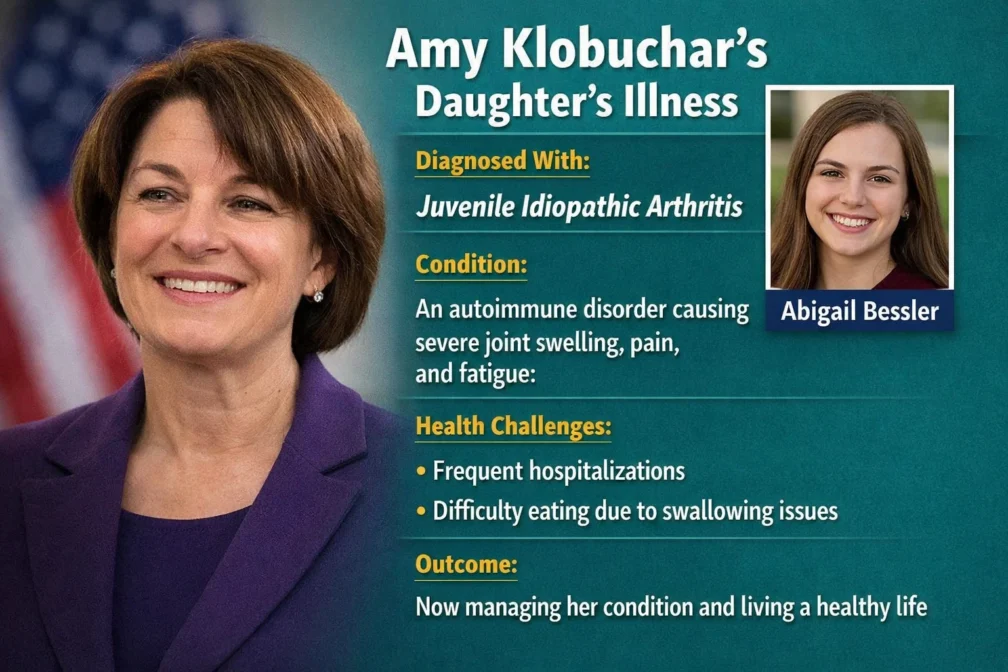
Abigail Bessler, the only child of Senator Amy Klobuchar and her husband, John Bessler, was born in 1995. For many years, the family managed to keep the details of Abigail’s health largely out of the public eye, a testament to their desire for normalcy. However, as Klobuchar’s political profile rose, so did public curiosity about her family life. It became known that from a young age, Abigail faced significant and serious health issues that required extensive medical attention and hospitalization.
The specifics of Abigail’s early condition were closely guarded, but it was acknowledged that she endured a period of grave illness that was every parent’s nightmare. These experiences thrust the Klobuchar-Bessler family into the complex world of pediatric specialists, hospital protocols, and the emotional rollercoaster of caring for a critically ill child. This foundational period was crucial, forging the family’s resilience and providing Senator Klobuchar with a firsthand, gut-level understanding of the American healthcare system from a patient-family perspective.
Understanding the Medical Condition
While the family has maintained a respectful boundary around the most intimate medical details, Senator Klobuchar has spoken broadly about the nature of her daughter’s struggles. Abigail was born with a serious health condition that required multiple surgeries and lengthy hospital stays during her infancy and childhood. The situation surrounding Amy Klobuchar daughter illness involved managing a chronic, life-altering condition rather than a one-time acute event.
This distinction is important for understanding the long-term impact on the family. Managing a chronic childhood illness is a marathon, not a sprint, involving ongoing treatment, developmental considerations, and constant vigilance. The Klobuchar-Bessler family’s experience aligns with that of millions of American families who navigate the daily realities of complex pediatric care, balancing hope with practicality, and normal life with medical urgency.
The Family’s Approach to Privacy and Public Life
Navigating privacy is a central theme in the story of Abigail’s health. Senator Klobuchar has consistently walked a fine line between acknowledging this pivotal part of her life and protecting her daughter’s right to a private existence. She has chosen to share enough to humanize her policy positions and connect with constituents on issues of healthcare, but she has stopped short of making her daughter’s medical records a public talking point.
This approach reflects a modern dilemma for public figures: how much of one’s personal trials should be leveraged for public good or political credibility? The Klobuchar family’s strategy has been one of dignified discretion. They have used their platform to advocate for systemic change without exploiting the personal details of Amy Klobuchar daughter illness, a balance that has earned respect from both supporters and observers who value personal boundaries.
The Impact on Senator Klobuchar’s Policy Priorities
It is impossible to separate Senator Klobuchar’s legislative focus from her personal experiences. Her time in hospital rooms and specialist offices translated directly into a robust policy agenda focused on healthcare accessibility, affordability, and patient safety. She has been a staunch supporter of the Affordable Care Act, particularly its protections for individuals with pre-existing conditions—a provision of profound personal significance.
Furthermore, Klobuchar has championed bills to lower prescription drug costs, fund medical research, and improve mental health parity. Each of these priorities can be traced, in part, to the insights gained from navigating the system for her daughter. The lived experience of Amy Klobuchar daughter illness provided a lens through which complex policy proposals are viewed, ensuring they are grounded in the real-world needs of patients and families.
Advocacy for Children with Special Healthcare Needs
Beyond broad healthcare policy, Klobuchar’s advocacy has extended to the specific arena of pediatric and disability rights. Understanding the long-term needs of children who start life with serious health challenges, she has supported funding for early intervention programs, special education, and services that help young adults with healthcare needs transition to independence.
This focus acknowledges that an illness in childhood does not end at age eighteen; it evolves. Advocacy must therefore encompass a lifespan approach. Klobuchar’s work in this area demonstrates how a personal family journey can expand into a comprehensive policy vision, supporting not just medical treatment but the full integration and support of individuals with ongoing health needs into society.
The Role of Support Systems and Resilience
The journey through a child’s serious illness is never shouldered by parents alone. For the Klobuchar-Bessler family, resilience was built on a foundation of critical support systems. This included world-class medical teams, the understanding of friends and colleagues, and the strength of their own family unit. Senator Klobuchar has often credited her husband, a law professor, as being a pillar of partnership during the most difficult times.
This aspect of the story highlights a universal truth for families in crisis: systemic support is as vital as medical intervention. The ability to maintain a career, a marriage, and a household while managing a child’s healthcare is dependent on a network of help. The family’s experience underscores the importance of employer flexibility, accessible childcare for healthy siblings, and community resources that together form a safety net.
Public Perception and Media Narratives
The media’s handling of Amy Klobuchar daughter illness has varied over the years. Initially, it was a peripheral part of her biographical narrative. During her presidential campaign in 2020, it received more focused attention as voters sought to understand the candidate’s core motivations and personal shaping. Generally, the coverage has been respectful, focusing on the policy implications rather than sensationalizing the medical details.
This measured media approach is somewhat atypical and speaks to the family’s successful establishment of clear boundaries. The narrative that has emerged is one of strength and dedication, often framed as a testament to Klobuchar’s tenacity. It has become an integral, yet not defining, part of her public identity—a challenge met with grace that informs her work without solely dictating it.
Comparisons to Other Political Families
Many American political figures have faced public family health crises, from John McCain’s cancer diagnosis to the Biden family’s tragedies. Each story is unique, but common threads exist. Like the Klobuchars, these families must negotiate privacy, public curiosity, and the potential for their experience to fuel advocacy. What distinguishes the Klobuchar narrative is its focus on a chronic childhood condition, a prolonged and private battle that required a different kind of endurance.
This context is important for a full understanding. It places the story of Amy Klobuchar daughter illness within a broader American tradition where personal hardship in the political class can deepen empathy and shape governance. The comparison shows that while the details differ, the transformation of personal pain into public purpose is a recurring theme in national leadership.
The Evolution of Healthcare Debate and Personal Stories
In an era of intensely polarized healthcare debates, personal stories have become powerful tools for persuasion. Legislators often invoke constituents’ tales to ground abstract arguments in reality. Klobuchar’s ability to reference her own family’s journey, albeit without excessive detail, carries a unique weight. It provides an unassailable authenticity to her positions on insurance markets, drug pricing, and hospital billing.
This evolution signifies a shift in political communication. Data and ideology are now frequently complemented by personal narrative. The Klobuchar family’s experience serves as a prime example of how a private health struggle can become a public touchstone, helping to bridge partisan divides by reminding all parties of the human stakes involved in policy decisions.
Long-Term Health Outcomes and Looking Forward
Today, Abigail Bessler is a young adult who has graduated from Yale University and is building her own life and career. Her mother has stated that Abigail is “doing great,” a simple phrase that belies the immense relief and joy of any parent who has guided a child through major health challenges. This positive outcome is a central, hopeful part of the story.
Looking forward, the legacy of this journey continues. The policy work influenced by Amy Klobuchar daughter illness persists in the Senate. Furthermore, Abigail’s transition into healthy adulthood stands as a beacon of hope for other families at the beginning of a similar path. It proves that with advanced medicine, steadfast care, and resilience, children facing serious illnesses can and do thrive.
A Deeper Dive: The Policy Impacts of Personal Experience
The translation of personal experience into law is rarely linear, but in Klobuchar’s case, the connections are clear. Her focus on anti-price gouging for lifesaving drugs, for instance, comes from understanding the financial toxicity that can accompany long-term treatment. Her advocacy for medical research funding is driven by knowledge that future cures depend on today’s investment.
This tangible impact is perhaps the most significant result of the family’s private struggle made publicly relevant. It moves the narrative from one of sympathy to one of substantive change. The story of Amy Klobuchar daughter illness is, in its policy implications, also the story of potential improvements to healthcare for countless other American families.
The Interplay of Personal Strength and Political Tenacity
Observers often note Senator Klobuchar’s reputational “tenacity” or “midwestern grit.” It is not a stretch to see the roots of this character trait being tested and hardened in hospital wards and during anxious nights. The perseverance required to navigate a child’s medical crisis shares DNA with the perseverance needed to advance complex legislation in a divided Congress.
This interplay between personal fortitude and professional determination is a subtle but critical part of her story. The skills honed in one arena—advocacy, meticulous attention to detail, relentless follow-up—transfer to the other. It creates a profile of a leader whose resilience has been forged in the most personal of fires.
Breaking Down the Journey: Key Phases and Impacts
To fully encapsulate the multifaceted nature of this family journey, it is helpful to break it down into distinct phases, each with its own challenges and outcomes. The following table provides a structured overview of how Amy Klobuchar daughter illness evolved from a private crisis to a source of public policy influence.
Table: The Evolution of a Family Health Journey – From Private Crisis to Public Impact
| Phase of the Journey | Key Characteristics | Family Focus | Resulting Policy & Advocacy Impact |
|---|---|---|---|
| Acute Medical Crisis | Initial diagnosis, surgeries, intensive hospital care. High uncertainty and immediate threat. | Survival, immediate medical outcomes, emotional stabilization. | Foundational empathy; deep, firsthand understanding of hospital systems and acute care trauma. |
| Chronic Management | Long-term treatment plans, ongoing specialist care, integrating care with daily life and development. | Balancing normalcy with vigilance, managing long-term health and developmental needs. | Advocacy for chronic disease management, pre-existing condition protections, and continuity of care legislation. |
| Navigating Systems | Dealing with insurance, medical bills, administrative complexity, and coordinating among providers. | Preventing financial toxicity, reducing administrative burden to focus energy on care. | Focus on healthcare affordability, price transparency, anti-price gouging bills, and simplified billing. |
| Transition to Adulthood | Moving from pediatric to adult healthcare systems, planning for long-term independence and health. | Ensuring a successful launch into adult life with necessary supports and medical continuity. | Support for transition programs, disability rights, and insurance coverage for young adults. |
| Leveraging Experience | Using hard-won knowledge to inform public service and connect with constituents on healthcare issues. | Determining the appropriate level of public sharing to advocate effectively while protecting privacy. | A comprehensive healthcare legislative portfolio focused on accessibility, affordability, and patient-centered reform. |
A Note on the Broader Conversation About Health and Privacy
The Klobuchar family’s story sits at the heart of a national conversation about how much we are entitled to know about the health of our public figures and their families. It raises ethical questions for the press and the public. Their handling of the situation offers a potential model: sharing enough to create understanding and advocate for change, but firmly upholding a zone of privacy essential for human dignity.
This balance is increasingly rare but profoundly important. It allows for the humanization of policy without the dehumanization of the individual. As one family friend was quoted as saying in a rare reflective moment, “They lived every parent’s fear, and came through it with their grace and their family intact. Amy’s work on healthcare isn’t political for her; it’s a moral imperative born of that experience.” This sentiment captures the essence of the journey—transforming private fear into public good.
Conclusion: A Legacy of Care and Fortitude
The narrative of Amy Klobuchar daughter illness is ultimately one of quiet strength, profound love, and transformative advocacy. It is a reminder that behind the political headlines and legislative battles, our elected officials are individuals whose lives are shaped by the same joys and tribulations as our own. Abigail Bessler’s health journey has been a central, defining experience for her family, one that has inevitably influenced the trajectory of Senator Klobuchar’s career and her contributions to American healthcare policy.
This story does not end with a cure or a single piece of legislation. It is an ongoing testament to the power of resilience. It highlights the critical importance of a healthcare system that supports families in crisis, and it demonstrates how personal experience, when channeled with integrity and respect for privacy, can become a powerful force for systemic improvement. The Klobuchar-Bessler family’s journey continues to inspire not because it is unique, but because it echoes the challenges faced by so many, turning personal trial into a promise of better care for all.
Frequently Asked Questions (FAQ)
What is the nature of Amy Klobuchar’s daughter’s illness?
Senator Klobuchar has protected the specific diagnosis as part of her daughter’s private medical information. However, she has publicly shared that her daughter, Abigail, was born with a serious health condition that required multiple surgeries and extended hospital stays during her childhood. The situation involved a chronic, significant health challenge that the family managed over many years, moving from acute crisis to long-term care.
How has her daughter’s health affected Amy Klobuchar’s political career?
The experience of navigating her daughter’s illness has deeply informed Senator Klobuchar’s policy priorities, making healthcare a cornerstone of her legislative agenda. It has fueled her advocacy for the Affordable Care Act, protections for pre-existing conditions, lower drug prices, and increased funding for medical research. The personal journey has provided her with a powerful, authentic perspective that shapes her approach to health policy.
How does the family balance privacy with public advocacy regarding the health issue?
The Klobuchar-Bessler family has maintained a careful balance by speaking broadly about their experiences and the systemic challenges they faced, while steadfastly refusing to divulge specific, intimate medical details about Abigail. This approach allows Senator Klobuchar to use her platform for advocacy—highlighting the real-world impact of policies—without turning her daughter’s private life into a public spectacle.
Is Amy Klobuchar’s daughter healthy now?
By all public accounts, yes. Senator Klobuchar has stated that her daughter Abigail is “doing great.” Abigail Bessler graduated from Yale University and is living independently as a young adult. Her positive health outcomes represent a hopeful conclusion to the long and difficult childhood journey she and her family endured.
What legislation has Klobuchar specifically supported because of her family’s experience?
Motivated by her family’s journey, Klobuchar has been a lead sponsor or strong supporter of numerous bills. Key examples include legislation to allow Medicare to negotiate drug prices, bills to prevent price gouging for essential medications, efforts to strengthen mental health parity, and ongoing support for the Affordable Care Act’s patient protections. Each aims to address the affordability, accessibility, and patient-centered focus she found critical during her own experience with Amy Klobuchar daughter illness.