
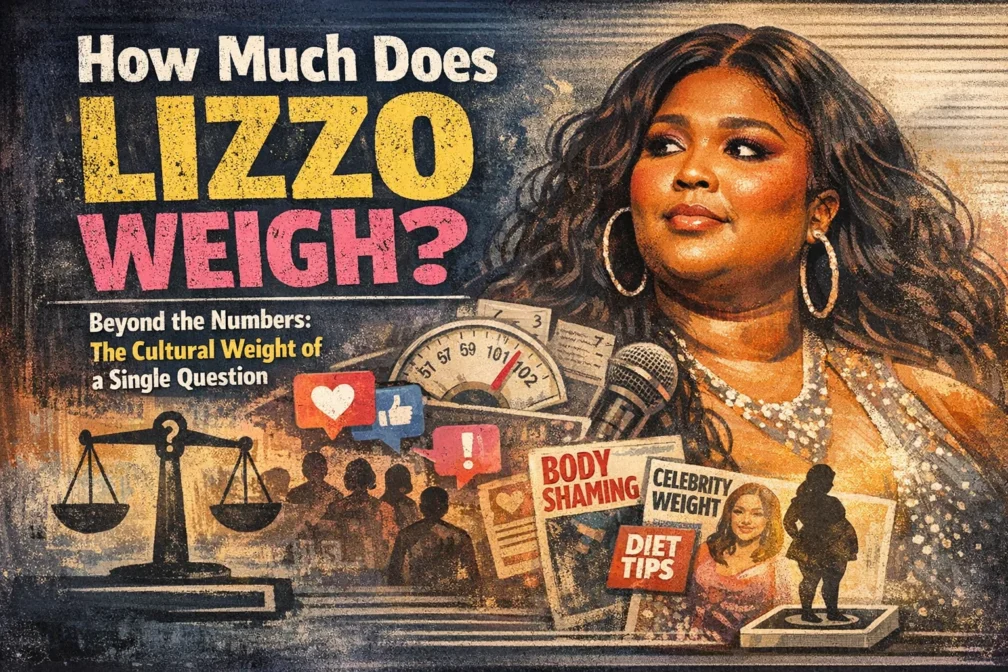

To ask, “how much does Lizzo weigh,” is to ask a question that echoes far beyond a simple three-digit number on a scale. It’s a query loaded with cultural baggage, personal curiosity, public obsession, and societal norms about beauty, health, and celebrity. This single question has, perhaps unintentionally, positioned the Grammy-winning singer, flutist, and force of nature at the epicenter of one of the most critical conversations of our time: body positivity, autonomy, and the relentless scrutiny of women’s bodies in the public eye.
While a numerical answer exists—and we will address the available information—to fixate on that figure alone is to miss the entire, far more compelling narrative. This article will delve into the multifaceted layers behind that question, exploring Lizzo’s own public journey, the toxic nature of body policing, the flawed conflation of weight and health, and the powerful movement she champions. Our goal is not to provide a mere statistic but to offer a comprehensive understanding of why this question is asked, its implications, and the profound cultural shift Lizzo represents, making this the definitive resource on the topic.
The Origin of Public Fascination
Lizzo’s entry into the mainstream spotlight was inherently revolutionary because she did not conform to the historically narrow beauty standards of the pop and hip-hop industries. Her unapologetic presence, charisma, and sheer talent forced a conversation that had long been simmering in niche communities into the glaring lights of Top 40 radio and arena stages. The public’s fascination with her physicality became a parallel storyline to her musical success, a phenomenon experienced by many plus-size celebrities but amplified by Lizzo’s defiant joy and refusal to be relegated to a “before” picture.
This fixation often manifests as a seemingly innocuous search for a concrete fact: how much does Lizzo weigh? This search for a number provides a false sense of objectivity and understanding, reducing a complex human being to a quantifiable metric. It stems from a societal habit of using weight as a primary shorthand for categorizing people, making assumptions about their health, discipline, and even worth. In Lizzo’s case, the question became particularly pronounced as her star power rose, directly challenging long-held industry norms.
Lizzo’s Own Words on Body and Autonomy
Lizzo has never shied away from discussing her body, but she has consistently shifted the narrative from numbers to empowerment. In interviews and through her social media platforms, she has articulated a philosophy of self-love that is both personal and political. She speaks of her journey to appreciate her body for its capabilities—carrying her through powerful performances, playing complex flute melodies, and dancing with breathtaking stamina—rather than its appearance alone. Her messaging actively discourages the public’s obsession with her physical metrics.
Crucially, Lizzo has drawn a firm boundary regarding the privacy of her health data. While she celebrates her body publicly, she separates that celebration from any obligation to disclose specifics like weight, diet, or medical details. In a culture that feels entitled to every aspect of a celebrity’s life, this boundary is a radical act. It reinforces a key principle: body positivity is about autonomy and self-definition, not about providing data for public consumption or critique. Her stance forces fans and critics alike to engage with her art and message, not her measurements.
The Problem with Weight as a Public Metric
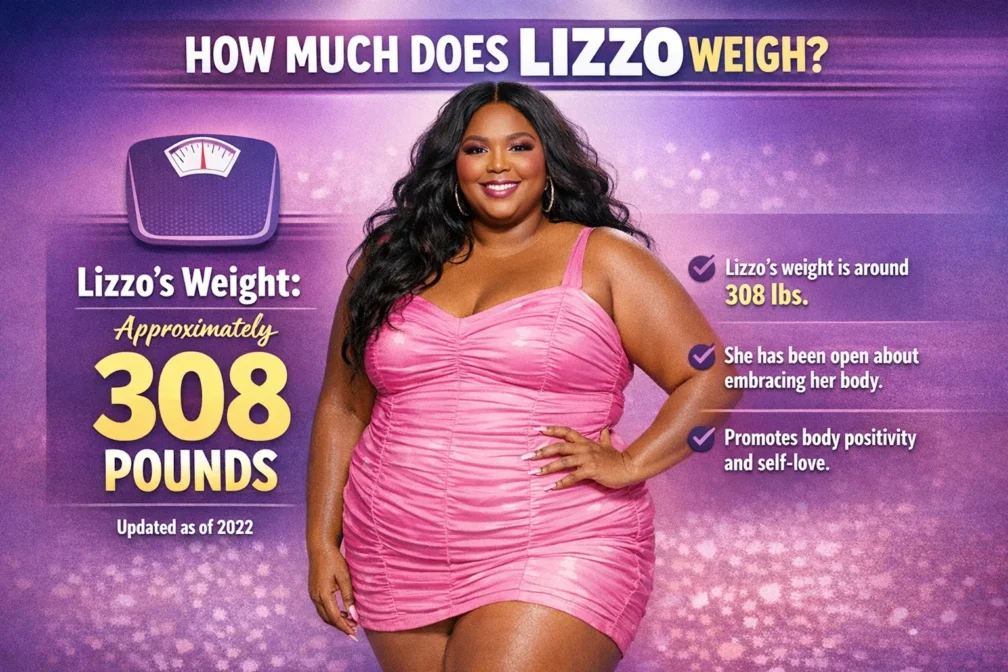
Focusing on a celebrity’s weight reduces their multifaceted identity to a single, often misleading, data point. It fuels comparison culture, where individuals measure their own worth against a number attributed to someone else, ignoring the vast differences in genetics, muscle mass, bone density, and lifestyle. This obsession is rarely about genuine concern; it is often a vector for criticism, bullying, and the enforcement of conformity. The question “how much does Lizzo weigh” is frequently a gateway to unsolicited judgments about her health and choices.
Furthermore, public weight disclosure can have harmful ripple effects. It can trigger individuals with eating disorders, reinforce negative body image, and perpetuate the myth that weight is the sole determinant of health. When a celebrity’s weight becomes headline news, it inadvertently legitimizes the idea that this number is newsworthy and relevant to anyone other than the individual and their healthcare providers. This media cycle normalizes the invasive scrutiny of bodies, particularly those of women and marginalized genders.
Health Versus Appearance: A Critical Distinction
One of the most pervasive and damaging myths in modern discourse is the direct, linear equation of weight with health. This oversimplification, known as “healthism,” ignores a vast body of scientific research on Health at Every Size (HAES) and the social determinants of health. Lizzo’s public presence has made her an unintentional flashpoint in this debate. Critics often use her weight as a proxy to assume poor health, while supporters point to her athletic prowess and energy as counter-evidence.
The truth is, an individual’s health status is complex and multifaceted, encompassing mental well-being, cardiovascular fitness, metabolic markers, genetic factors, and access to healthcare. Lizzo’s visible stamina, strength, and vocal power during performances are indicators of significant physical fitness. However, even these observations from afar do not provide a complete health picture—nor should they need to. Her example underscores a vital lesson: health is not a visual diagnosis, and well-being cannot be judged from a photograph or a number on a scale.
Media’s Role in Perpetuating Scrutiny
The media landscape operates on a supply-and-demand model, and the public’s curiosity about celebrity bodies creates a lucrative market for speculation and “expert” analysis. Outlets often publish articles speculating on how much does Lizzo weigh, using paparazzi photos in swimsuits or stage outfits as “evidence” for their estimates. These pieces are frequently cloaked in the language of concern (“Are We Worried About Lizzo’s Health?”) or framed as neutral reporting, but their effect is to further objectify and scrutinize.
This coverage creates a distorted echo chamber. Even when the intent is to defend Lizzo or celebrate her body positivity, the repeated focus on her physical form keeps the conversation anchored to her appearance. It’s a paradox many plus-size public figures face: the effort to combat negative scrutiny can result in a different, but still pervasive, form of scrutiny. The most respectful reporting focuses on her artistry, activism, and achievements, deliberately decoupling her talent from discussions of her physique.
Body Positivity and Lizzo’s Evolution of Message
Lizzo emerged as a prominent figure in the body positivity movement, but her relationship with the term has evolved with nuance. Initially, her anthems like “Truth Hurts” and “Good as Hell” became soundtracks for self-love, inspiring fans to embrace their bodies as they are. She presented a vision of confidence that was vibrant, sexy, and unapologetic, directly challenging the idea that such attributes are reserved for thin bodies. Her message was one of radical self-acceptance in a world designed to make you feel otherwise.
In recent years, Lizzo has thoughtfully reframed her advocacy. She has spoken about the pressure that comes with being labeled the “face of body positivity,” a movement that has, at times, been co-opted and diluted. She now emphasizes body neutrality—the idea that your worth is not tied to loving or hating your body, but simply to existing in it without constant judgment. This shift is profound. It acknowledges that demanding constant, euphoric self-love can be another form of pressure, and that peace can sometimes be found in simply letting your body be.
The Fitness and Performance Reality
Any discussion of how much does Lizzo weigh must be contextualized with her demonstrable physical capabilities, which are a matter of public record through her performances. Lizzo is, by any objective measure, a highly trained athlete. Her concert routines involve hours of intense, high-energy dancing, complex choreography, and powerful vocal delivery—all while playing the flute. This requires exceptional cardiovascular endurance, muscular strength, and lung capacity.
To maintain this level of professional performance, Lizzo engages in rigorous, disciplined training. She has shared glimpses of her workouts, which include strength training, cardio sessions, and dance rehearsals. This reality dismantles the lazy stereotype that a person of her size must be inactive or unfit. Her fitness regimen is not about weight loss; it is about performance sustainability, strength, and the functional needs of her career. It is a powerful reminder that fitness comes in all sizes and that athleticism cannot be judged by appearance alone.
Navigating Criticism and Online Hate
As a high-profile, plus-size Black woman, Lizzo faces a torrent of online abuse that intersects misogyny, racism, and fatphobia. The question of her weight is often the entry point for vitriolic comments and “concern trolling,” where hate is disguised as worry for her health. This constant barrage is not mere criticism; it is a targeted campaign meant to undermine her confidence, her success, and her right to occupy public space joyfully. The psychological toll of this sustained negativity is immense.
Lizzo’s response to this hate has been multifaceted. She has openly discussed the pain it causes, refusing to pretend it doesn’t affect her. Simultaneously, she has leveraged her platform to clap back against trolls, often with humor and sharp wit, denying them the power to silence her. She also uses these experiences to advocate for others, speaking out against cyberbullying and the specific harms of fatphobic rhetoric. Her resilience in the face of this storm is a testament to her strength, but it also highlights the urgent need for more compassionate online discourse.
The Business of Being Lizzo: Impact and Influence
Lizzo’s cultural impact transcends music. She has built a formidable brand that champions inclusivity, which has significant economic and industry implications. Her shapewear line, Yitty, launched with a mission to provide comfortable, stylish shapewear for all sizes, directly challenging an industry that often marginalizes plus-size consumers. Her presence has pushed fashion brands, event planners, and the music industry at large to consider inclusivity not as a niche trend, but as a business imperative.
Her influence has created tangible space for other artists. The success of “Lizzo’s Watch Out for the Big Grrrls” reality competition, which sought confident, plus-size backup dancers, directly confronted Hollywood’s sizeism and launched careers. By succeeding at the highest level, she has forced gatekeepers to re-evaluate their biases about what a marketable, bankable star looks like. Her business ventures prove that centering marginalized communities is not just morally right, but economically savvy.
A Comparative Look at Public Figure Weight Discourse
The public’s obsession with celebrity weight is not unique to Lizzo, though the lens is often harsher for women and particularly for Black women. Comparing how this topic is treated across different public figures reveals stark disparities and cultural biases. The table below illustrates how the narrative shifts based on gender, race, and industry.
| Public Figure | Typical Media Framing | Public Discourse Focus | Underlying Cultural Bias |
|---|---|---|---|
| Lizzo (Plus-size Black Female Musician) | “Health concerns,” “body confidence,” scrutiny of outfits. | Fixation on how much does Lizzo weigh, debate over her health, polarized love/hate. | Fatphobia, misogynoir (anti-Black misogyny), policing of Black women’s bodies. |
| Chris Pratt (Male Actor, Body Transformation) | “Incredible dedication,” “hard work pays off,” “got in shape for a role.” | Celebration of weight loss/muscle gain, focus on discipline and method. | Praise for male conformity to muscular ideals, less focus on long-term health. |
| Adele (Plus-size White Female Musician) | “Weight loss journey,” “transformation,” “new look,” often framed as inspirational. | Initial praise for talent despite size, later intense focus on weight loss as an achievement. | Conditional acceptance of plus-size women; ultimate value placed on moving toward thinness. |
| The Rock (Male Actor, Muscular Build) | “Genetic marvel,” “epic workout routine,” “incredible size.” | Awe at mass and musculature, rarely framed as a health risk despite extreme physique. | Glorification of hyper-masculinity and extreme muscle, different health standards applied. |
| Selena Gomez (Thin White Female Musician) | Scrutiny over being “too thin,” speculation on illness or disorder, “body-shaming.” | Concern-trolling over low weight, invasive questions about mental and physical health. | Policing of thin women’s bodies, assumption that low weight equals sickness. |
This comparison reveals a frustrating double standard. Men’s weight changes are often framed as narratives of mastery, while women’s are framed as morality tales. For plus-size women of color like Lizzo, the discourse is rarely about transformation; it is a constant, static critique of their existence in a body that defies white, thin-centric norms.
The Science of Weight and Individual Variation
Modern medicine increasingly understands that weight is a poor standalone indicator of health. Genetics play a massive role in determining an individual’s natural weight range or set point. Metabolism, hormonal profiles, bone structure, and even gut microbiome composition vary dramatically from person to person. Two individuals with the same height, weight, and diet can have vastly different internal health markers, such as blood pressure, cholesterol, and insulin sensitivity.
This is why the Health at Every Size (HAES) paradigm is gaining traction among health professionals. HAES focuses on promoting healthy behaviors—like joyful movement, intuitive eating, and stress management—for people of all sizes, rather than focusing on weight loss as a primary goal. Outcomes research shows this approach can improve psychological and physical health metrics, regardless of whether weight changes. Lizzo’s lifestyle, focused on performance and feeling good, aligns more closely with this evidence-based approach than with restrictive diet culture.
Why the Exact Number is Irrelevant and Private
The specific answer to how much does Lizzo weigh is, ultimately, one of the least relevant facts about her. That number, even if known with precision, provides no meaningful insight into her health, her talent, her character, or her impact on the world. It is a data point stripped of all context, and the desperate search for it speaks more about our collective cultural dysfunction than about Lizzo herself. Her weight is a private medical detail that belongs solely to her.
The relentless pursuit of this number reflects a societal desire to categorize and rank. Knowing the figure allows people to slot her into their internal hierarchies, to compare, and to judge. Respecting her privacy on this matter is a basic acknowledgment of her humanity. It is a recognition that celebrities, despite their public lives, retain a right to bodily autonomy and personal boundaries. The energy spent speculating would be far better spent engaging with the art and activism she freely offers the world.
The Bigger Picture: Shifting Cultural Paradigms
Lizzo exists at a pivotal moment in a long, slow shift in how society views bodies. She is both a product of and a catalyst for the body positivity and fat acceptance movements that have challenged centuries of stigma. Her visibility makes the abstract political personal, forcing millions to confront their own biases every time she appears on a magazine cover, a awards show stage, or a television screen. This is not a comfortable process, and the backlash she faces is a testament to the deep-seated nature of these biases.
The ultimate goal, championed by Lizzo and many others, is a world where how much does Lizzo weigh is seen as a question with no more significance than asking about her shoe size. It is a vision of a culture that values people for their contributions, character, and creativity, and that recognizes the diversity of human bodies as a neutral fact of life, not a problem to be solved. While we are far from this ideal, the conversation Lizzo has irrevocably amplified is a crucial step on that path.
Conclusion
In seeking a definitive answer to how much does Lizzo weigh, we have journeyed through a landscape of media scrutiny, personal boundary-setting, societal bias, and scientific nuance. The takeaway is clear: the number itself is not only elusive but intentionally so, and its pursuit often leads us away from more meaningful understanding. Lizzo’s true significance lies not in her measurements, but in her monumental impact as an artist and advocate. She has used her platform to challenge destructive norms, champion inclusivity, and model a form of confidence that is both joyous and defiant. Her story urges us to redirect our gaze from the scale to the person, to value health as a holistic practice rather than an aesthetic, and to respect the fundamental right of every individual—celebrity or not—to exist in their body without public adjudication. The most important weight Lizzo carries is the weight of cultural change, and that is something no scale can ever measure.
Frequently Asked Questions
Is Lizzo’s weight officially documented anywhere?
No, Lizzo’s exact weight is not an official public record. Like most private health information, it is personal data she has chosen not to disclose. Any figures found online are unverified estimates or speculation, often based on visual appraisal which is notoriously inaccurate. The focus on finding a definitive number for how much does Lizzo weigh overlooks her consistent message that such metrics are irrelevant to her worth and talent.
How does Lizzo maintain her fitness for performing?
Lizzo maintains her impressive performance fitness through a professional, disciplined regimen tailored to her career demands. This includes regular strength and conditioning workouts, extensive dance rehearsals, and vocal training. Her approach to fitness is functionally driven, focusing on stamina, power, and the endurance required to deliver high-energy shows, rather than on weight-centric goals. This demonstrates a health-focused philosophy aligned with capability, not appearance.
Has Lizzo ever publicly addressed the weight questions directly?
Yes, Lizzo has addressed public curiosity about her body on numerous occasions, though she typically shifts the conversation toward empowerment and away from specifics. She has spoken about the pressure of being scrutinized and has firmly established that her health and body are private matters. By promoting body neutrality and self-love, she reframes the discussion, asking people to focus on her artistry rather than attempting to determine how much does Lizzo weigh.
Why is there so much controversy surrounding Lizzo’s body?
The controversy stems from deep-seated cultural fatphobia, misogyny, and racism that polices bodies that deviate from the thin, white ideal. Lizzo, as a successful, joyful, and sexually confident plus-size Black woman, challenges these norms profoundly, which triggers backlash. Much of the “controversy” is simply bias masquerading as concern, and it highlights the ongoing societal struggle to accept body diversity without prejudice or unsolicited commentary.
What is the difference between body positivity and body neutrality?
Body positivity is a movement that encourages loving and celebrating your body as it is, often challenging beauty standards. Body neutrality, a concept Lizzo has more recently embraced, suggests that your self-worth doesn’t have to be tied to how you feel about your body; it’s okay to simply accept it without constant positive or negative judgment. This can be a less pressured approach, acknowledging that some days you might not feel “positive,” but your value remains unchanged.