
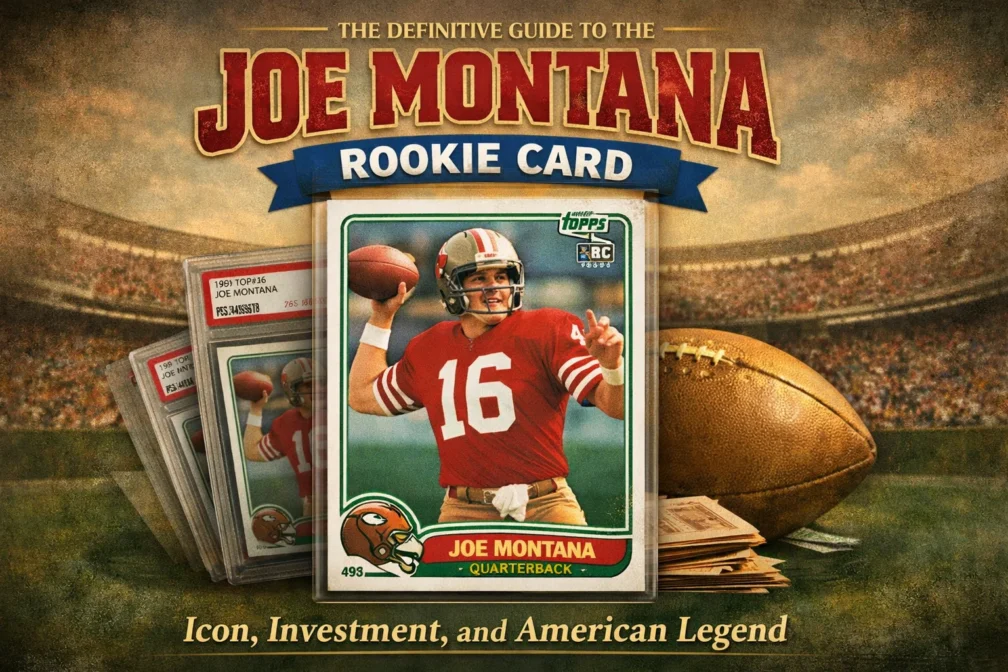

Joe Montana Rookie Card;The cardboard rectangle measures just 2.5 by 3.5 inches, a humble slice of 1980s printing stock. Yet, to a generation of football fans and to the multi-billion-dollar sports memorabilia market, it represents something far greater. The Joe Montana rookie card is not merely a piece of sports ephemera; it is a cultural touchstone, a tangible fragment of NFL history, and for many, the pinnacle of football card collecting. It captures the inception of “Joe Cool,” the quarterback whose ice-water veins and pinpoint accuracy redefined clutch performance, leading the San Francisco 49ers to four Super Bowl victories and cementing a dynasty.
This article is the ultimate resource for understanding this iconic collectible, dissecting its nuances, market dynamics, and enduring legacy. Whether you’re a seasoned collector verifying a long-held treasure, an investor analyzing asset potential, or a fan connecting with a childhood hero, the journey into the world of the Joe Montana rookie card is a fascinating exploration of value, nostalgia, and American sport.
The Historical Context of Montana’s Rookie Card Issue
The year was 1981, and the trading card landscape was profoundly different from today’s high-gloss, speculator-driven market. Topps was the undisputed king, producing a single, mainstream baseball and football set each year. The 1981 Topps football set, where Montana’s official rookie card resides (card #216), was released during a period of NFL transition and labor strife. For collectors at the time, pulling a quarterback from Notre Dame who had shown flashes of brilliance in his 1979 rookie season was interesting, but not necessarily earth-shattering. The card was printed in massive quantities, destined for bicycle spokes and cardboard boxes in closets across America, its true significance yet to be written.
Montana’s rise and the 49ers’ first Super Bowl win in the 1981 season began to change the card’s perception in real-time. As he orchestrated “The Catch” to Dwight Clark and marched through the playoffs, the Joe Montana rookie card slowly transformed from a common card into a must-have for young fans. This organic, performance-driven increase in demand, set against the backdrop of a rapidly growing hobby in the early 1980s, created the perfect storm. The card’s legacy is inextricably linked to this timeline—it is a pre-internet, pre-mass-speculation relic whose value was earned on the gridiron, not forecasted on investment spreadsheets.
Identifying the True Joe Montana Rookie Card
For newcomers, the rookie card landscape can be confusing. It is crucial to understand that while Joe Montana appears on other cards from 1981 and earlier, the universally recognized, principal Joe Montana rookie card is the 1981 Topps #216. This card features a classic, slightly grainy color photo of a young Montana in his 49ers home red jersey, poised to throw. The card back contains his 1979 and 1980 statistics and a brief biographical blurb. The iconic Topps logo and the “NFL Football” designation are present. Any deviation from this description likely points to a different, non-rookie issue or a modern reprint.
Several other cards are often mistaken for or conflated with the true rookie. The 1981 Topps “Quarterback Check List” card (#471) features Montana but is a checklist, not a rookie card. The 1980 Topps card (#338) is sometimes debated, as it features Montana but was produced prior to his official rookie season in the NFL; the hobby overwhelmingly recognizes the 1981 issue as the official rookie. Additionally, a 1979 regional issue from Fotoball exists but holds a separate niche status. For investment and collecting purposes, clarity is paramount: the 1981 Topps #216 is the cornerstone Montana rookie card.
Grading and Condition: The Absolute Determinants of Value
In the world of vintage sports cards, condition is not just a factor; it is the factor. Two copies of the same Joe Montana rookie card can differ in value by tens of thousands of dollars based solely on their physical state. This is where professional grading from services like PSA (Professional Sports Authenticator), SGC, or Beckett enters the picture. These companies encapsulate the card in a tamper-evident holder, assign a grade on a scale from 1 (Poor) to 10 (Gem Mint), and authenticate it, removing subjectivity from the assessment. For a high-value card like this, third-party grading is non-negotiable for any serious transaction.
The grading scale focuses on centering, corners, edges, and surface. A card with sharp corners, perfect centering, no edge wear, and a pristine, scratch-free surface can achieve the coveted Gem Mint 10 grade. Such examples are exceptionally rare for a mass-produced 1981 card, as the paper stock was susceptible to wear and the cutting process was inconsistent. Most surviving copies in collections today fall into the Excellent (EX) 5 to Mint (MT) 8 range, showing varying degrees of corner softening, off-centering, or surface flaws. The exponential premium paid for high-grade examples reflects their scarcity and the intense competition among top-tier collectors to own the best preserved pieces of history.
Market Value Analysis and Price Drivers
The market for a Joe Montana rookie card is dynamic, influenced by a complex interplay of factors beyond simple supply and demand. At its core, the price is a direct reflection of the card’s grade. A PSA 6 (EX-MT) might sell for a few hundred dollars—a solid entry point for many collectors. A PSA 8 (NM-MT) can command between $1,500 and $3,000, representing a well-presected copy. The market jumps dramatically for PSA 9 (Mint) examples, often reaching five-figure sums. The pinnacle, PSA 10, has sold at public auction for over $150,000, illustrating the staggering premium for perfection.
Beyond the grade, broader market trends exert powerful influence. The overall health of the sports collectibles market, nostalgia cycles for 1980s icons, and the performance of “alternative asset” classes all play a role. Montana’s enduring legacy as a cultural figure, his presence in media, and the continued success of the 49ers franchise help maintain steady demand. However, the market is not immune to corrections. As legendary collector and analyst Mike Berkus often notes, “The high-end vintage card market behaves like blue-chip art; it’s driven by extreme rarity and iconic status, not just player performance.” The Joe Montana rookie card sits firmly in that blue-chip category, making its value relatively resilient but subject to the whims of the high-stakes collector economy.
The Investment Perspective: Asset or Passion?
Viewing the Joe Montana rookie card through a purely investment lens requires a disciplined and informed approach. Unlike stocks or bonds, it is a tangible, illiquid asset with carrying costs (insurance, secure storage) and transaction fees. Its value is subjective, tied to emotional and cultural factors as much as financial ones. For a long-term investor, the thesis rests on Montana’s immutable place in history and the continual destruction, over decades, of high-grade copies through loss, damage, or mishandling, which slowly constricts supply. The most reliable investment strategy typically focuses on the highest-graded examples (PSA 8 and above), where scarcity is most pronounced.
However, for the vast majority of enthusiasts, the card is first and foremost an object of passion. It represents a connection to childhood, to a specific era of football, and to a player who embodied excellence under pressure. This emotional dividend is a crucial part of the card’s “value” that a balance sheet cannot capture. The ideal approach for most is a hybrid: acquire the best example you can reasonably afford within the context of your budget and passion, enjoy it as a centerpiece of your collection, and consider any potential financial appreciation a secondary bonus. Chasing quick flips in this mature market carries significant risk.
Authentication and the Menace of Counterfeits
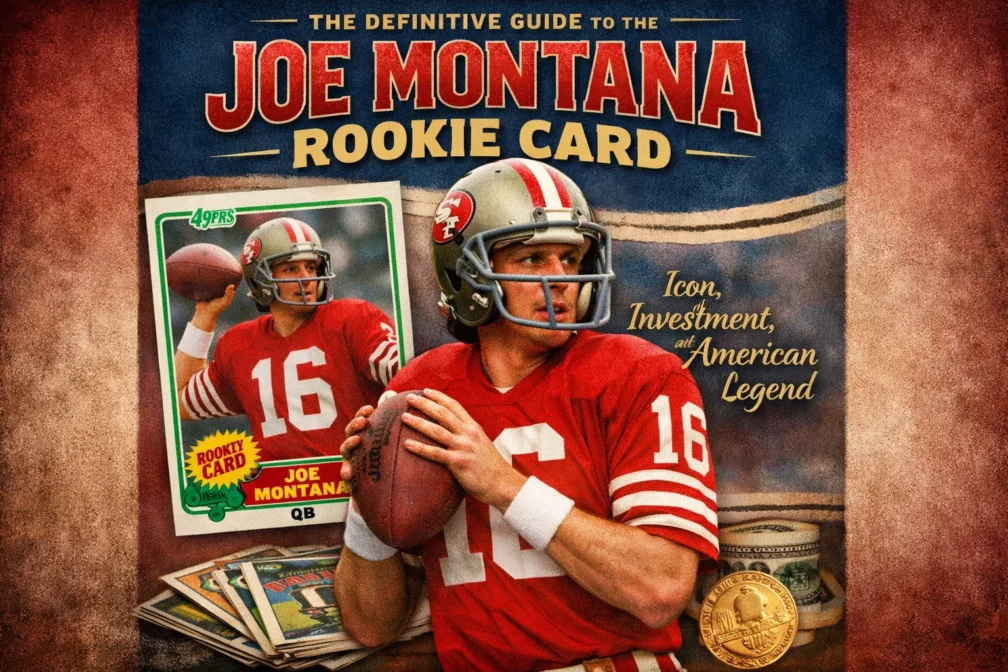
The popularity and value of the Joe Montana rookie card have made it a prime target for counterfeiters for decades. Forgeries range from crude reprints on modern, glossy stock to sophisticated “rebacks” and altered cards designed to deceive. The most common threat is the simple reprint—a modern copy often identifiable by its whiter, brighter card stock, sharper (too sharp) printing, and wrong feel. These are sometimes sold deceptively online to uninformed buyers. More dangerous are trimmed cards (where worn edges are carefully shaved to simulate sharp corners) or cards with color touch-ups to hide flaws.
This landscape makes professional authentication and grading utterly essential. The major grading companies employ experts who use specialized tools like black lights, microscopes, and precise calipers to detect alterations. They verify the card stock’s age, printing pattern, and dimensions. The security seal of a PSA, SGC, or BGS slab is the market’s universal language for “authentic and condition-graded.” For any purchase above a nominal sum, buying a raw (ungraded) card carries immense risk. As the adage goes, “Buy the holder, not just the card.” The peace of mind provided by a reputable grading service is worth its weight in gold for a serious collector pursuing a genuine Joe Montana rookie card.
Preservation and Care for the Long Term
Once you own a Joe Montana rookie card, proper preservation is your responsibility to maintain its condition and value. Even a professionally graded and slabbed card requires thoughtful care. The primary enemies are simple but relentless: light, humidity, and physical trauma. Ultraviolet light from direct sunlight or harsh indoor lighting will fade the card’s colors over time. High humidity can promote mold growth or cause the card to warp and stick within its holder. Physical shocks, while mitigated by the slab, should still be avoided.
The best practice is to store the slab in a climate-controlled environment—away from attics, basements, or exterior walls. Use a protective case designed for graded cards for an extra layer against scratches and impacts on the plastic holder. Consider a safe or safe deposit box for high-value examples, and ensure your homeowner’s or renter’s insurance policy specifically schedules and covers collectibles for their full appraised value. Handling should be minimal and done with clean, dry hands, holding the slab by its edges. Treating this piece of cardboard history with the reverence it deserves ensures it can be enjoyed—and potentially passed on—for generations.
The Card in the Context of Montana’s Legacy
The Joe Montana rookie card serves as a unique historical artifact that bookends a legendary career. It freezes a moment before the championships, before the legends of Super Bowls XVI, XIX, XXIII, and XXIV were written. It shows the young athlete with the weight of expectation yet to fully land on his shoulders. In this way, the card is more than a collectible; it is a “before” picture in a career defined by glorious “afters.” It connects the collector directly to the origin story of one of sports’ greatest winners, making ownership a participatory act in preserving that narrative.
This connection to legacy fuels its timeless appeal. While statistical arguments about the “Greatest of All Time” will rage endlessly, Montana’s reputation for flawless execution in critical moments is unassailable. The card symbolizes that beginning. It transcends the hobby itself, appearing in pop culture, in discussions of sports history, and as a shorthand for peak performance. For the collector, owning it is not just about having a valuable asset; it is about holding a piece of that narrative, a physical totem of excellence, coolness under fire, and a golden era of the NFL. As one longtime collector aptly put it, “The Joe Montana rookie card isn’t just a football card; it’s a certificate of authenticity for the myth of ‘Joe Cool.'”
Comparative Analysis of Key Montana Rookie-Era Cards
While the 1981 Topps #216 is the undisputed key rookie, understanding its value relative to other early Montana cards provides crucial market context. The table below breaks down the primary cards from this era, their distinguishing features, and their relative position in the collecting hierarchy.
| Card (Year, Set, Number) | Status & Description | Key Distinguishing Features | Relative Market Value & Position |
|---|---|---|---|
| 1981 Topps #216 | The Official Rookie Card | Standard Topps design, photo in red home jersey, “NFL Football” logo. | Highest. The cornerstone of the collection. Value is highly sensitive to grade, with PSA 10s being ultra-premium. |
| 1981 Topps QB Check List #471 | Rookie-Year Card (Not a Rookie) | Checklist card featuring Montana’s name and photo among other QBs. | Low. A curiosity piece. Worth a small fraction of the true rookie, appealing to completists. |
| 1980 Topps #338 | Pre-Rookie Card | Issued before his NFL regular-season debut. Features a posed, headshot-style photo. | Moderate/High. Considered a “XRC” (Extended Rookie Card) by many. Commands significant value but consistently trades at a discount to the 1981 rookie. |
| 1979 Fotoball | Regional Issue / Pre-Rookie | Unlicensed, regionally distributed set. Features a generic, painted-style portrait. | Niche/Moderate. Valued by dedicated vintage football collectors for its age and oddity. Not a major driver of the mainstream market. |
| 1981 Topps Stickers #5 | Rookie-Year Sticker | Adhesive sticker from Topps’ parallel sticker set. Same image as card #216. | Low/Moderate. Collectible in its own right, especially in high grade, but remains a sticker, not the base card. |
Strategic Buying Guide for Collectors
Entering the market for a Joe Montana rookie card demands a clear strategy. First, define your “why.” Are you a fan wanting a tangible memento? An investor allocating capital to alternative assets? Or a collector seeking a centerpiece for a 49ers or QB collection? Your goal dictates your budget and target grade. For the fan, a lower-grade (PSA 3-5) but presentable copy offers the iconic image and connection at a much lower cost. For the investor, liquidity and growth potential are highest in the PSA 8-10 range, despite the significant capital required.
Once your goal is set, become a student of the market. Use realized price databases from auction houses and major sales platforms to understand the true going rate for each grade. When ready to buy, prioritize reputable marketplaces that guarantee authenticity for graded cards. Be patient; the right card at a fair price will appear. Avoid auctions that seem too good to be true, and never hesitate to ask sellers for additional high-resolution photos of a graded card, even in its holder, to check for any holder damage or issues not apparent in stock photos. A disciplined, research-driven approach is the best path to a satisfying acquisition.
Conclusion
The journey through the world of the Joe Montana rookie card reveals much more than just pricing trends and grading scales. It uncovers a microcosm of American culture, where sports, memory, commerce, and art intersect on a small piece of printed cardboard. This card endures because it represents a perfect storm: an iconic, universally respected athlete at the dawn of his legend, produced in an era of mass-yet-analog production, and surviving into a digital age that craves tangible connections to the past. Whether it rests in a climate-controlled safe or is proudly displayed on a desk, it carries a story—of “The Catch,” of comebacks, of championships, and of the quiet confidence that defined an era.
Ultimately, owning this card is a personal statement. For some, it’s the culmination of a childhood dream. For others, it’s a strategic asset in a diversified portfolio. But for all, it is a key that unlocks a specific moment in time, a testament to enduring excellence. The Joe Montana rookie card has weathered market bubbles and crashes, the rise of new stars, and the evolution of the hobby itself. Its status remains unshaken, a true monument in the cardboard cathedral of sports collectibles, forever capturing the moment before Joe Cool became a legend.
Frequently Asked Questions (FAQ)
What is the most valuable Joe Montana rookie card?
The most valuable and recognized Joe Montana rookie card is the 1981 Topps football card, number 216. High-grade examples (PSA 9 or 10) from this set command the highest prices in the market, often reaching well into five or even six figures for a pristine Gem Mint 10, due to their extreme rarity.
How can I tell if my Joe Montana rookie card is real?
Authenticating a raw card requires expertise. Look for correct color saturation, the specific “feel” of vintage Topps card stock, and precise measurements. The most reliable method is to submit it to a professional grading service like PSA or SGC. For most collectors, purchasing a copy that is already professionally graded and slabed is the safest way to guarantee you own a genuine Joe Montana rookie card.
Why are graded cards so much more expensive?
Graded cards are more expensive because the grade provides a verified, standardized assessment of condition and authenticity. This removes risk for the buyer and creates a liquid, transparent market. High grades (8, 9, 10) indicate exceptional preservation, which is exceedingly rare for a mass-produced paper item from 1981, hence the exponential price premium.
Is the 1980 Topps card considered a rookie?
While the 1980 Topps card (#338) is a highly valuable and desirable early Montana card, the mainstream sports card hobby universally recognizes the 1981 Topps #216 as his official rookie card. The 1980 card is typically referred to as a “pre-rookie” or “extended rookie card” (XRC) and trades at a notable discount to the 1981 issue.
What is the best way to sell my Joe Montana rookie card?
The best way to sell depends on the card’s grade and your goals. For high-value, graded cards, consignment with a major auction house (e.g., Heritage Auctions, Goldin) can reach a global audience of serious collectors. For mid-range graded cards, reputable online marketplaces like eBay or dedicated collectibles platforms offer strong liquidity. Always ensure you have clear, high-quality photos and an accurate description.