
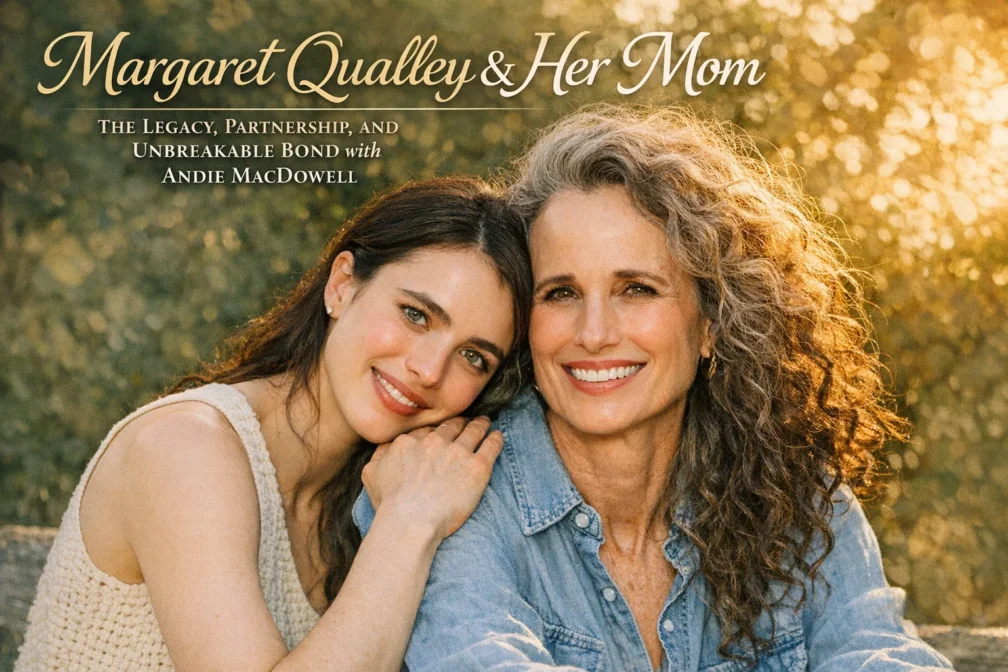

Margaret Qualley and Her Mom;In the shimmering, often unforgiving landscape of Hollywood, the narrative of legacy is a powerful force. Few contemporary stories illustrate this dynamic as beautifully and complexly as that of actress Margaret Qualley and her mother, the iconic Andie MacDowell. To search for “Margaret Qualley mom” is to open a door not just to a simple familial fact, but to a rich tapestry of artistic inheritance, mutual respect, and a shared journey through the spotlight’s glare.
Their relationship transcends the typical parent-child dynamic, evolving into a parallel partnership of two formidable artists navigating the same industry, separated by decades yet connected by profound love and understanding. This exploration delves beyond the surface-level curiosity, examining how the bond between Margaret Qualley and her mom has shaped careers, informed choices, and presented a unique case study in balancing personal identity with a famous lineage. It’s a story of a daughter stepping out of a formidable shadow not by running away, but by walking a path illuminated by her mother’s grace, while simultaneously carving her own distinct and gritty artistic trail.
The Foundation of an Artistic Dynasty
The story of Margaret Qualley’s mom begins with Andie MacDowell’s own groundbreaking career, which set the stage for everything to follow. Emerging in the 1980s, MacDowell quickly became a defining face of the era, known for her classic beauty, Southern grace, and roles in seminal films like Sex, Lies, and Videotape, Groundhog Day, and Four Weddings and a Funeral. Her success was hard-won, navigating an industry that initially tried to dub her voice, challenging perceptions and establishing herself as both a commercial draw and an actor of serious depth. This environment—a household where creativity and the complexities of fame were dinner table conversation—was the incubator for young Margaret and her sisters.
From this unique upbringing, Margaret Qualley absorbed lessons not found in any acting school. She witnessed firsthand the discipline required, the vulnerability of being publicly scrutinized, and the importance of artistic integrity. It was a dual education: the normalcy of family life in North Carolina, juxtaposed with the surreal reality of having a globally recognized movie star for a mother. This foundation didn’t pressure her to follow in her mother’s footsteps so much as it demystified the process, treating the artistic profession not as an unattainable fantasy, but as a valid, if challenging, career path. The legacy wasn’t a burden to shoulder, but a context to understand, providing a rare map of the industry’s terrain before she ever set foot on it herself.
Carving a Distinct Path in the Family Business
While the influence of Margaret Qualley’s mother is undeniable, Margaret’s career trajectory has been meticulously crafted to establish her own singular identity. Her choices reflect a deliberate move towards more unconventional, often darker, and physically demanding roles that starkly contrast with her mother’s early romantic comedy image. From her haunting portrayal of Ann Reinking in Fosse/Verdon and the gritty resilience in Maid to the unsettling charisma in The Leftovers and Poor Things, Qualley has gravitated towards complex, psychologically nuanced characters. This strategic selection showcases an actor determined to be defined by her own craft, not just her famous lineage.
This conscious differentiation is a common, healthy narrative for children of celebrities, but in Qualley’s case, it feels less like rebellion and more like evolution. She leverages the access and understanding her background provided, while using it as a springboard into uncharted territory. Her mother’s career exemplified a certain brand of elegant, relatable stardom; Margaret’s explores the raw, the awkward, and the avant-garde. This divergence highlights a key truth: the most successful artistic legacies are not carbon copies, but conversations across generations. Margaret speaks in a different dialect of the same language her mother helped popularize, allowing both to coexist as respected, separate entities within the same industry sphere.
The Unprecedented On-Screen Partnership
The dynamic between Margaret Qualley and her mom reached a new, meta-textual zenith with their shared screen time in the Netflix limited series Maid. In a poignant piece of casting, Andie MacDowell portrayed Paula, the charismatic but unstable mother to Margaret’s Alex, a young mother fleeing an abusive relationship. The series, a stark drama about poverty and resilience, provided a platform for their real-life bond to fuel an incredibly raw and authentic fictional portrayal of a fractured mother-daughter relationship. The layers were profound: an actress playing a version of maternal failure, opposite her own daughter, who was playing a character fighting to break a cycle of instability.
This collaboration was far from a sentimental gimmick. It demanded a deep, professional trust and a willingness to explore emotionally hazardous territory. For audiences, the knowledge of their real relationship amplified every scene, adding a palpable depth to the conflict and the fleeting moments of connection. The performance earned widespread critical acclaim, proving that their partnership could translate into powerful art. It demonstrated that Margaret Qualley’s mother was not just a supportive figure off-screen, but a formidable acting partner capable of meeting her daughter in the most challenging creative spaces, elevating the work for both of them.
Public Appearances and Mutual Advocacy
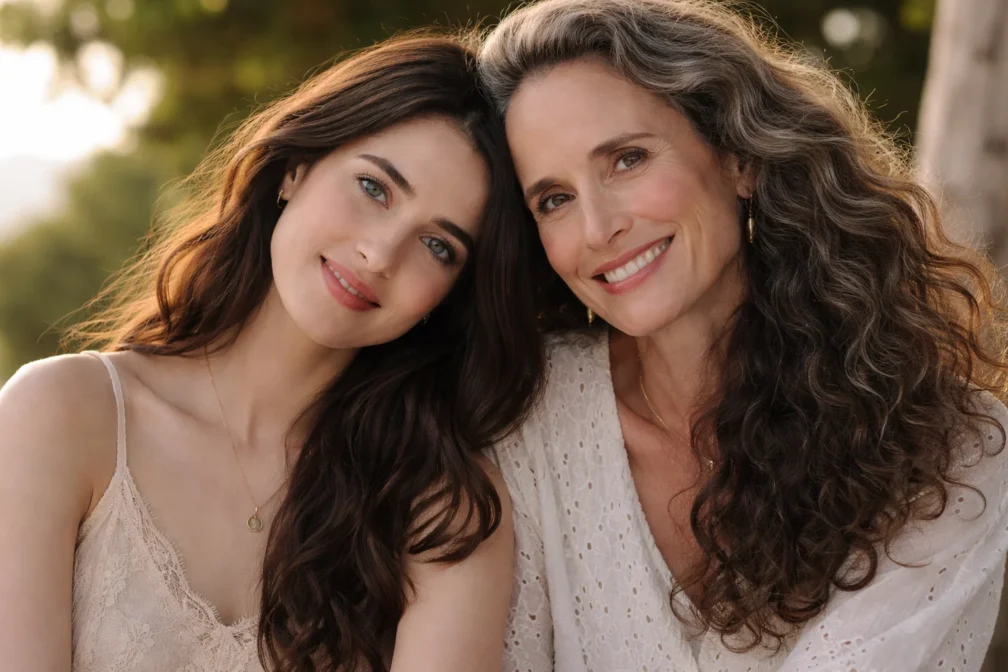
Beyond the screen, the public relationship between Margaret Qualley and Andie MacDowell offers a masterclass in graceful, mutual support within the fame ecosystem. On red carpets, at award shows, and in interviews, their interactions are consistently marked by palpable warmth, pride, and a seeming lack of competitive tension. MacDowell has often spoken with glowing admiration about her daughter’s talent and work ethic, while Qualley frequently references her mother’s guidance and strength. This public-facing dynamic counters the tired Hollywood trope of generational rivalry, presenting instead a model of uplift.
Their advocacy extends beyond words. By choosing to work together on a project like Maid, they made a powerful statement about the types of stories they value—complex female narratives about class and survival. Their joint appearances are not just familial displays but professional alignments, subtly shaping both of their public personas. Qualley is framed as the heir to a legacy of grace-under-pressure, while MacDowell is reaffirmed as a relevant, evolving artist. This symbiotic promotion benefits both careers, allowing the narrative of Margaret Qualley and her mom to be one of collective success rather than individual overshadowing.
Navigating the Shadows and Spotlight
Growing up as the daughter of Margaret Qualley’s mom, Andie MacDowell, undoubtedly came with unique psychological complexities. The “shadow” of a famous parent is a well-documented phenomenon, involving immense public expectations and the constant comparative analysis. For Margaret, this meant her early forays into ballet and then acting were immediately contextualized through the lens of her mother’s fame. Every interview, every early role, invited questions about Andie, a dynamic that could easily stifle a young artist’s sense of self.
Qualley’s navigation of this spotlight has been notably adept and introspective. She acknowledges the privilege and access her name provided, never dismissing it, but she has also been open about the pressure to differentiate herself. Her strategy has been one of quiet confidence and deliberate choice, letting her work—and its distinct tone—speak the loudest. By embracing both the advantages and the challenges, she has transformed a potential obstacle into a facet of her story. She doesn’t run from the association with her famous mother; she integrates it into her own narrative as a point of origin, not the final destination, effectively managing the dual identity of being both “Andie MacDowell’s daughter” and “Margaret Qualley, acclaimed actress.”
The Influence of Maternal Example on Craft
The professional influence of Margaret Qualley’s mother extends into the very philosophy of their craft. Andie MacDowell’s career, particularly her work with independent film pioneers like Steven Soderbergh, established a precedent for seeking out directors with strong, distinctive visions—a path Margaret has clearly emulated. From working with auteurs like Quentin Tarantino (Once Upon a Time in Hollywood) and Yorgos Lanthimos (Poor Things) to starring in auteur-driven series like The Leftovers with Damon Lindelof, Qualley’s filmography reveals a strategic preference for bold, director-driven projects over conventional star vehicles.
Furthermore, MacDowell’s longevity and ability to transition from a romantic lead to a respected character actor provided a blueprint for sustainable career evolution. She demonstrated that an actress’s relevance isn’t tied to a specific age or type, but to continued curiosity and artistic risk. Margaret seems to be absorbing this lesson early, avoiding typecasting by oscillating between period pieces, psychological dramas, and dark comedies. The example set by her mother is not one of specific role choices, but of an overarching approach: collaborate with visionaries, protect your artistic integrity, and build a career with layers that unfold over decades, not just a few years of peak fame.
Shared Personal Values and Private Life
Away from the cameras, the bond between Margaret Qualley and her mom is rooted in a shared set of personal values that have helped ground both women in an unstable industry. Their decision to maintain strong ties to their home state of North Carolina, for instance, speaks to a shared need for normalcy and connection to a place outside of Los Angeles and New York. This grounding in a more traditional, slower-paced environment likely provides a crucial sanctuary and a sense of perspective, reminding them that their world is not limited to film sets and premieres.
Family, clearly, is paramount. The closeness of the Qualley-MacDowell clan, including Margaret’s sisters, is frequently mentioned as a source of strength. Andie MacDowell’s public discussions about motherhood, aging naturally, and maintaining mental health have painted a picture of a person who prioritizes authenticity and well-being. Margaret, in turn, has mirrored this by keeping her private life largely private and discussing her work in terms of its artistic merit rather than celebrity trappings. This alignment in values creates a stable core, ensuring that the narrative of Margaret Qualley and her mom is underpinned by something more substantive than fame—a shared understanding of what truly matters.
Breaking Generational Cycles Through Art
Interestingly, the story of Margaret Qualley’s mom intersects powerfully with themes Margaret has explicitly explored in her chosen roles, particularly that of breaking generational cycles. In Maid, her character Alex is in a desperate struggle to escape the patterns of poverty, dysfunction, and unreliable relationships exemplified by her mother, Paula. This fictional narrative resonates deeply with the real-life context of choosing a different professional path, even within the same field. While not a cycle of trauma, entering the family business of acting requires its own form of breaking and remolding—establishing independence while honoring lineage.
Qualley’s role choices suggest a deep fascination with women at turning points, fighting against inherited circumstances. This thematic focus can be seen as an artistic working-through of the very concept of legacy. By portraying characters who actively fight for a different future, she is, in a metaphorical sense, dramatizing her own journey of self-definition. The art becomes a space to process and articulate the complex feelings surrounding inheritance, expectation, and self-determination, themes she has lived firsthand as the daughter of a celebrated Margaret Qualley mother.
The Symbiosis of Personal and Professional Evolution
The relationship between Margaret Qualley and Andie MacDowell is not static; it has evolved in tandem with their individual career chapters. When Margaret was a child and teenager, the dynamic was classic mother-daughter, with Andie as the established guide. As Margaret entered adulthood and her career accelerated, the relationship necessarily shifted toward peerage and mutual mentorship. Andie’s own career renaissance in recent years, with celebrated roles in Maid and Magic Mike’s Last Dance, has occurred concurrently with Margaret’s rise, creating a fascinating parallel growth curve.
This synchronicity has allowed for a unique symbiosis. Margaret’s bold, modern choices may inspire Andie to take fresh risks, while Andie’s decades of wisdom and industry navigation provide Margaret with an invaluable counsel. They are now experiencing the peaks and valleys of celebrity in real-time together, albeit from different generational vantage points. This ongoing, evolving dialogue enriches both their personal bond and their professional instincts, making the story of Margaret Qualley and her mom a continually unfolding narrative rather than a fixed backstory.
Comparative Career Landscapes: Andie MacDowell vs. Margaret Qualley
While both are celebrated actresses, the industries Andie MacDowell entered in the 1980s/90s and the one Margaret Qualley navigates today are vastly different. The table below highlights key contrasts in their career launches, the media landscape, and the types of roles that defined their early fame, illustrating how Margaret is both a beneficiary of her mother’s trailblazing and a product of a new Hollywood era.
| Career Aspect | Andie MacDowell (1980s-1990s) | Margaret Qualley (2010s-Present) |
|---|---|---|
| Path to Discovery | Traditional model-turned-actress; discovered through fashion and commercial work. | Grew up in the industry; formal training at prestigious institutions (e.g., professional ballet, acting coaches). |
| Defining Early Roles | Romantic Comedies & Indies (Groundhog Day, Four Weddings, Sex, Lies…). | Prestige TV & Auteur Cinema (The Leftovers, Fosse/Verdon, Once Upon a Time in Hollywood). |
| Media & Press Landscape | Dominated by print magazines, talk shows, and film critics; slower news cycle. | Digital, social media, and streaming-driven; constant, fragmented public scrutiny and fan engagement. |
| Industry Barriers Faced | Fighting to be taken seriously beyond her model looks; initial voice-dubbing controversy. | Navigating nepotism discourse, immediate comparison to famous parent, and a saturated digital market. |
| Archetype on Arrival | The “American Sweetheart” and accessible romantic lead. | The “Indie Darling” and character actor known for quirky, intense, dramatic roles. |
| Control Over Narrative | Limited; largely mediated by studios, agents, and traditional press. | More direct, though complex, via social media and choice of niche, artist-driven projects. |
The Power of a Supportive Foundation
At its heart, the enduring success of both women points to the incalculable power of a supportive, understanding foundation. Andie MacDowell provided not a push into the business, but an environment where artistic pursuit was valid and its realities were known. As Margaret Qualley’s mom, she offered a unique form of preparation—one that balanced encouragement with a realistic picture of the challenges ahead. This support likely gave Margaret the confidence to pursue her own unusual path, knowing she had a safe harbor regardless of the industry’s reception.
This dynamic reframes the concept of “nepotism baby” from a dismissive label into a more nuanced discussion about advantage. The primary advantage may not have been mere job placement, but rather the gift of informed consent—entering the arena with eyes wide open, equipped with emotional tools and professional insights many aspiring actors lack. It’s the difference between being thrown into the deep end and being taught to swim in a controlled environment before navigating the open ocean. The foundation built by Margaret Qualley’s mother was one of resilience and perspective, arguably the most valuable inheritances of all.
Public Perception and Media Narratives
The media has played a significant role in shaping the story of Margaret Qualley and her mom, often cycling through familiar tropes before landing on a more appreciative complexity. Initially, coverage of Margaret’s career was almost invariably tied to her mother, a framing that can be reductive. Over time, as her body of work grew undeniable, the narrative shifted to one of “carving her own path” and “stepping out of the shadow.” This, too, is a standard script for celebrity offspring.
Today, a more sophisticated understanding is emerging. The press and public now often celebrate their partnership, as seen with Maid, and analyze their careers as two distinct but interwoven threads. The narrative has matured from simple comparison to an appreciation of their unique contributions and their mutual influence. This evolution in public perception mirrors Margaret’s own career journey—from being seen primarily in relation to her famous mother, to being recognized for her own merits, and finally to a place where the relationship is viewed as an additive, fascinating dimension of both of their stories, rather than a defining limitation.
A Legacy in Real Time
What makes the story of Margaret Qualley’s mom so compelling is that it is a legacy being written in real time. This isn’t a historical look back at a faded star and her progeny; it’s an active, unfolding collaboration between two working artists at the top of their game. Andie MacDowell is experiencing a well-deserved career resurgence, while Margaret Qualley is solidifying her status as one of her generation’s most interesting and daring actors. They are, in a sense, building their legacies side-by-side, each victory for one reflecting well on the other.
This ongoing chapter adds a layer of vitality to their story. We are not just observing how a mother influenced a daughter, but how they continue to influence each other. Every red carpet they share, every interview where they express mutual pride, and every potential future collaboration adds a new sentence to this living document. The legacy is dynamic, a two-way street of inspiration and support that promises to evolve in unexpected ways for years to come, ensuring the connection between Margaret Qualley and her mom remains a relevant and inspiring narrative in popular culture.
Conclusion
The inquiry into Margaret Qualley mom unravels a narrative far richer than a mere familial footnote. It reveals a profound case study in artistic inheritance, personal identity, and the evolution of Hollywood itself. The bond between Margaret Qualley and Andie MacDowell is not a simple story of a daughter following in her mother’s footsteps, but rather one of two distinct artists using the same map to explore different territories. They have managed a rare feat: maintaining an unbreakable personal bond while fostering independent professional identities, even collaborating to create critically acclaimed art that deepens the meaning of both.
Ultimately, their story transcends gossip or simple curiosity. It speaks to universal themes of legacy, support, and finding one’s own voice within a chorus of expectations. Andie MacDowell provided a foundation of grace, strength, and real-world knowledge, while Margaret Qualley built upon it with fearless creativity and a modern sensibility. Together, they demonstrate that the most powerful legacies are not about replication, but about respectful, loving evolution—a lesson that resonates far beyond the borders of Hollywood. As their careers continue to flourish in parallel, the story of Margaret Qualley and her mother, Andie MacDowell, will endure as a testament to the power of family and the enduring beauty of individual artistic journeys intertwined.
Frequently Asked Questions
How did Margaret Qualley’s mother influence her decision to become an actress?
Andie MacDowell, Margaret Qualley’s mom, created an environment where the arts were a normal and respected part of life. Rather than pushing her into acting, MacDowell’s influence was more about demystifying the profession. Margaret grew up seeing both the creative joys and the practical challenges of the industry firsthand, which allowed her to make an informed choice. This unique upbringing provided her with a realistic perspective and a deep-seated understanding of the craft that many aspiring actors lack, giving her a distinct foundation of confidence and context.
Have Margaret Qualley and her mother ever worked together?
Yes, in a highly acclaimed collaboration. Margaret Qualley and her mom, Andie MacDowell, starred together in the 2021 Netflix limited series Maid. MacDowell played Paula, the emotionally volatile mother to Qualley’s protagonist, Alex. The project was a profound professional and personal undertaking, leveraging their real-life bond to portray a complex, strained mother-daughter relationship with stunning authenticity. The series stands as the central example of their on-screen partnership and is a direct answer to searches about Margaret Qualley and her mom working in tandem.
Does Margaret Qualley have a good relationship with her mother?
By all public accounts and from their own frequent statements, Margaret Qualley shares an exceptionally close and supportive relationship with her mother, Andie MacDowell. They consistently express mutual admiration and pride in interviews and are often seen together at public events displaying genuine warmth. Their collaboration on Maid, which required immense trust and emotional vulnerability, strongly suggests a deep, respectful, and loving bond that transcends the typical parent-child dynamic, evolving into a strong friendship and professional mutual respect.
How does Margaret Qualley deal with being compared to her famous mother?
Margaret Qualley has handled comparisons to Margaret Qualley’s mother with notable grace and strategy. She openly acknowledges the privilege and name recognition her lineage provides, never shying away from her mother’s influence. However, she has decisively carved her own path by consistently selecting roles that are gritty, unconventional, and far removed from her mother’s early romantic comedy archetype. By letting her distinct body of work speak for itself, she has successfully shifted the public conversation from comparison to appreciation of her own unique talents and career choices.
What is the age difference between Margaret Qualley and Andie MacDowell?
Andie MacDowell was born on April 21, 1958, and her daughter Margaret Qualley was born on October 23, 1994. This makes the age difference between Margaret Qualley and her mom approximately 36 years. This gap places them in different generational cohorts within Hollywood, which contextualizes their different career landscapes—MacDowell rose to fame in the 80s/90s studio system, while Qualley’s career is shaped by the rise of prestige television and streaming.