
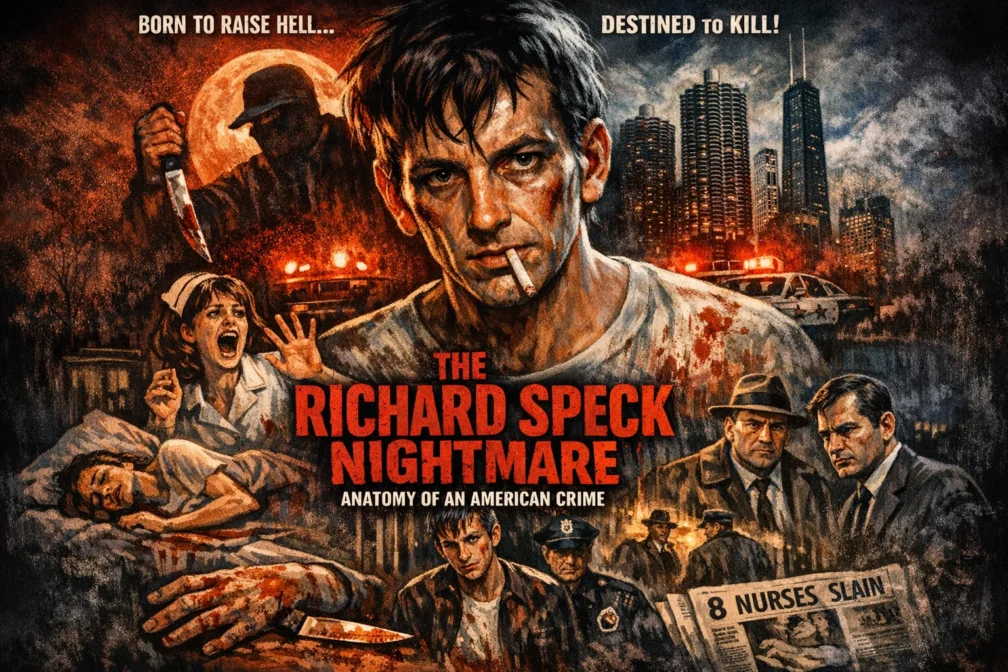

The name Richard Speck evokes a singular, shattering horror in the annals of American crime. On a hot July night in 1966, on Chicago’s quiet Southeast Side, a single intruder entered a townhouse shared by student nurses and unleashed a methodical, almost unimaginable slaughter. By dawn, eight young women were dead, a ninth had miraculously survived, and the nation was left reeling. The Richard Speck case became an instant media firestorm, a benchmark of brutality, and a legal battleground that would influence criminal justice for decades. But to understand the full, grim tapestry of this event is to look beyond the sensational headlines.
It requires a deep, unflinching examination of the man himself, the catastrophic failure of systems meant to protect society, the groundbreaking forensic and legal maneuvers that ensued, and the permanent scar it left on the collective consciousness. This is not just the story of a mass murder; it is a complex case study in pathology, judicial evolution, and the dark questions about violence, deterrence, and chance that linger long after the cell door clangs shut.
The Man Before the Monster
To search for the origins of such violence is to trace a path through a landscape of profound dysfunction. Richard Benjamin Speck’s early life was a textbook catalogue of risk factors for severe antisocial development. Born in 1941 in Kirkwood, Illinois, his childhood was marked by instability, loss, and exposure to toxic masculinity. His father died when Speck was six, and his mother quickly remarried a man reputed to be a violent alcoholic—a figure who reportedly exposed the young boy to brawling and heavy drinking. Speck’s own emerging profile was one of chronic underachievement, petty delinquency, and a rootless existence, drifting between Texas and Illinois, accumulating arrests for crimes like burglary, check forgery, and bar fights. He was not a master criminal but a perennial nuisance, a heavy drinker whose bouts of alcohol-fueled rage were becoming more pronounced. This pre-existing pathology was the volatile substrate; the events of July 13-14, 1966, would be the catastrophic reaction.
Crucially, in the immediate days before the murders, Richard Speck was a walking failure of multiple public systems. He had been released from jail in Monmouth, Illinois, just days prior, wanted on a separate warrant in Michigan. He arrived in Chicago, broke and drinking heavily, allegedly with a vague plan to stow away on a ship. After spending his last dollars at a bar, he wandered the South Chicago neighborhood, a ticking time bomb the mechanisms of law enforcement had, through a series of minor jurisdictional oversights and procedural misses, failed to defuse. He was not an unknown phantom; he was a known entity with a record, wanted in another state, and adrift in a city where he had no support system. The convergence of his profound personal disorders with these systemic gaps would prove fatal.
The Night of Horrors: A Timeline of Terror
The townhouse at 2319 East 100th Street was a temporary home for nine student nurses from South Chicago Community Hospital. On the evening of July 13, they were relaxing, unaware that Richard Speck had already entered the unlocked first-floor apartment, confronted three nurses there, and herded them upstairs to the second-floor unit where the others were. Claiming he only wanted money for a flight to New Orleans, he instead used a knife and his physicality to subdue and bind the young women, one by one, methodically taking them from the main room to be murdered in adjacent bedrooms. The terror unfolded over hours, a gruesome, intimate slaughter that relied on control and isolation rather than a blitz attack. The victims—Gloria Davy, Patricia Matusek, Nina Schmale, Pamela Wilkening, Suzanne Farris, Mary Ann Jordan, Merlita Gargullo, and Valentina Pasion—ranged in age from 20 to 24. Their promising lives were extinguished with chilling efficiency.
The sole survivor, Corazon Amurao, provided the critical testimony that would break the case. A 23-year-old Filipino student, she displayed incredible presence of mind by rolling under a bed and remaining motionless, hidden by the bed’s hanging cover, while the murders occurred around her. From her hiding place, she heard the struggles, the pleading, and the silence that followed. She remained hidden for hours after Speck finally left, terrified he might return. It was her eventual emergence and desperate cries to a passerby from a window—“All my friends are dead!”—that alerted the world to the atrocity. Her detailed description of the assailant, most notably his distinctive “Born to Raise Hell” tattoo, would become the linchpin of the investigation.
The Investigation and the Tattoo That Told All
The Chicago Police Department was confronted with a crime scene of unprecedented scale and savagery. The initial response was a massive dragnet, but the case broke with astonishing speed due to a combination of survivor testimony and sharp observational work. Corazon Amurao’s description of the tattoo on the killer’s left forearm became the investigation’s most famous clue. That detail was broadcast widely, and it was this specific marker that led to his identification. A young doctor who had treated Richard Speck for a minor hand injury at a charity hospital just a day after the murders—a visit prompted by the cuts he sustained during the attacks—recognized the description and contacted authorities. This provided the first concrete name to the phantom.
Simultaneously, a crucial piece of physical evidence was discovered. In a room at the Raleigh Hotel on North Dearborn Street, where Speck had rented a cheap room, police found the probable murder weapon: a knife with a broken tip. Forensic examination would later match this broken tip to a fragment left in one of the victims. This direct physical link, combined with the eyewitness identification from Amurao and the doctor, created an ironclad circumstantial case. Richard Speck was arrested on July 17, 1966, just days after the murders, not in a dramatic standoff, but while passively lying in a bed at the Cook County Hospital, having attempted suicide with an overdose of alcohol and pills. His capture was as anticlimactic as his crime was monumental.
The Trial of the Century in Chicago
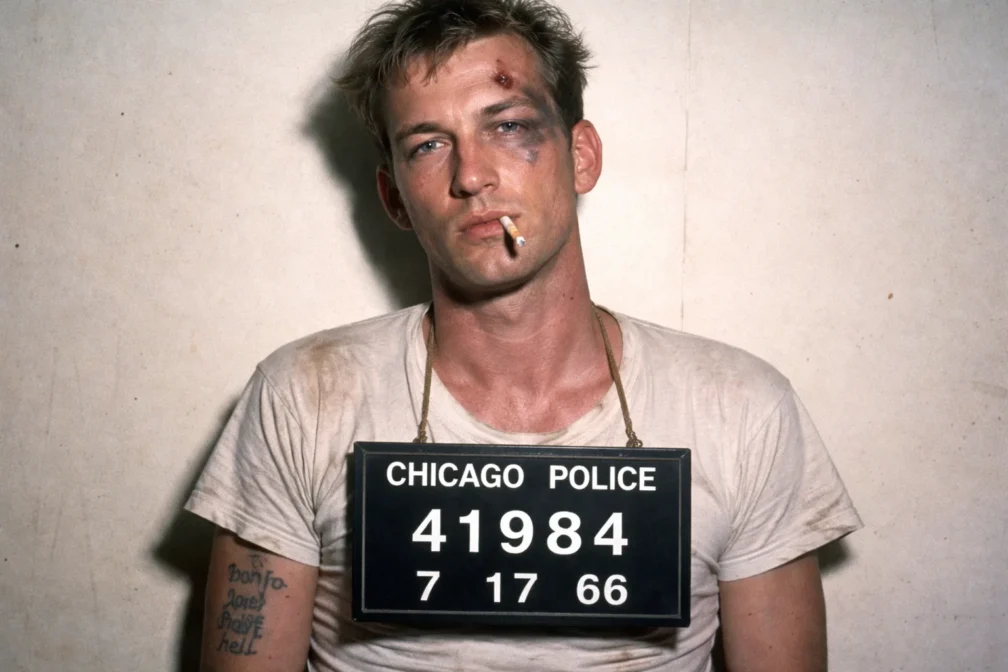
The trial of Richard Speck, which began in April 1967, was a media spectacle that pushed the boundaries of courtroom broadcasting and legal strategy. Presided over by Judge Herbert Paschen, the prosecution, led by State’s Attorney John Glenville and William Martin, built their case meticulously on the twin pillars of Corazon Amurao’s powerful, unwavering eyewitness testimony and the forensic evidence. The defense, headed by public defenders Gerald Getty and Charles Bellows, pursued an insanity plea, arguing that Speck’s heavy intoxication on a mix of alcohol and drugs, including a reported 72-hour “Dexedrine binge,” rendered him incapable of forming the specific intent to commit murder—a legal requirement for first-degree murder in Illinois at the time.
The trial’s most iconic moment was the direct examination of Corazon Amurao. Her calm, precise, and devastatingly detailed account of the night, including her identification of Speck in the courtroom, was the trial’s emotional and evidentiary climax. The prosecution also presented the physical evidence: the knife, the matched tip, and Speck’s fingerprints from the townhouse. In a strategic move, the defense chose not to have Speck testify, avoiding a potentially disastrous cross-examination. The insanity defense ultimately failed to convince the jury, which saw the methodical, binding, and room-to-room nature of the killings as evidence of purposeful action. The legal strategy to save Richard Speck from the death penalty hinged on this narrow, and ultimately unsuccessful, argument.
The Death Sentence and the Landmark Supreme Court Appeal
On June 5, 1967, the jury found Richard Speck guilty of eight counts of murder and sentenced him to death in the electric chair. He was transferred to the maximum-security Menard Correctional Center to await execution. However, his case would become a pivotal footnote in American constitutional law. In 1971, the United States Supreme Court, in the case of Witherspoon v. Illinois, ruled that a state could not exclude potential jurors simply because they expressed general objections to the death penalty. This decision directly affected Speck’s sentence, as such jurors had been excluded from his trial. The Illinois Supreme Court subsequently vacated his death sentence, automatically commuting it to a term of 50 to 150 years in prison—effectively eight consecutive 50-to-150-year terms.
This legal twist meant Richard Speck would spend the rest of his life in prison, but not on Death Row. The commutation removed him from the immediate shadow of execution and placed him into the general prison population at the Stateville Correctional Center. This transition from condemned man to long-term inmate set the stage for the next, bizarre chapter in his story. It also fueled public outrage, becoming a primary exhibit for death penalty proponents who argued that the legal system had failed to deliver final justice for the eight murdered nurses.
Life Behind Bars: Notoriety and the Infamous Tape
Confined at Stateville, Richard Speck initially faded from the headlines, becoming just another notorious inmate serving a de facto life sentence. However, in 1996, on the 30th anniversary of the murders, a shocking story resurfaced him in the most sensational way. A former prison guard, working with a tabloid television show, smuggled out a homemade videotape recorded inside the prison. The tape showed a muscled, heavily tattooed Speck, often wearing only shorts or a bikini, partying in what appeared to be a private cell equipped with a television, stereo, and makeshift weights. More disturbingly, he was seen using drugs and bragging about his crimes in a casual, remorseless manner, even suggesting the nurses had enjoyed their fate.
The tape was a national scandal. It depicted a Richard Speck utterly transformed in physique and seemingly living a life of relative privilege, which stood in grotesque contrast to the suffering he had inflicted. The footage sparked immediate investigations into corruption and lax security at Stateville. Officials scrambled to explain how such a notorious prisoner could have access to contraband, private space, and appear so defiantly unrepentant. The tape did more than embarrass the prison system; it reopened the raw wound of the crimes for the victims’ families and the public, reinforcing the image of Speck as a monstrous figure thriving in the very system meant to punish him.
Psychological Autopsy: Diagnosing a Killer
Attempts to clinically understand Richard Speck have centered on the concept of Antisocial Personality Disorder (ASPD), with strong indications of psychopathy. Forensic psychiatrists who evaluated him noted his profound lack of empathy, his egocentricity, his shallow affect, and his history of impulsive, irresponsible behavior. The murders themselves displayed a cold, instrumental violence—the victims were means to an end (theft, perhaps), or simply objects in the way of his fleeting desires. His post-crime behavior, from the suicide attempt to his later prison bravado, further illustrated a personality disordered individual focused on self-preservation and self-gratification, devoid of genuine remorse.
However, the role of substance intoxication remains a critical, debated factor. The defense argued it rendered him legally insane. Most experts reject that it created a psychotic break, but acknowledge it was a profound disinhibitor. Alcohol and stimulants likely stripped away the already-feeble social constraints that normally modulate behavior, allowing his violent predispositions to erupt in their most extreme, uncontrolled form. In this view, Richard Speck was not a man who became a monster solely because of drugs; he was a disordered man whose monstrous potential was unleashed and magnified by them. The environment of the townhouse—a space of vulnerability he stumbled upon—provided the opportunity for this catastrophic synergy.
The Legal and Cultural Legacy
The Richard Speck case left indelible marks on American law and culture. Legally, it was a key case testing the insanity defense and, more lastingly, became ensnared in the evolving constitutional law around the death penalty and jury selection via Witherspoon. It served as a grim reference point in debates about criminal responsibility, the limits of intoxication defenses, and the adequacy of sentencing. Culturally, the crime shattered the perceived safety of communal living, particularly for young women, and became a benchmark for random, motiveless horror. The image of the lone, drifting killer preying on strangers in their home entered the national nightmare, influencing crime reporting, true crime genres, and public policy discussions about urban safety and the tracking of repeat offenders.
The case also highlighted the power and trauma of eyewitness testimony. Corazon Amurao became both the heroic figure who secured justice and a symbol of the profound psychological cost borne by survivors of extreme violence. Her courage under cross-examination set a standard. Furthermore, the shocking prison videotape decades later fueled lasting public cynicism about the penal system’s ability to truly punish or reform the most vicious criminals. The narrative of Richard Speck thus evolved from a crime story to a legal precedent to a symbol of systemic failure, ensuring its place in the American true-crime canon.
Richard Speck in Comparative Context
Placing Richard Speck within the landscape of American mass murder reveals both unique and shared characteristics. His crime preceded the more common “spree killing” or “mass shooting” era; it was an intimate, hands-on, prolonged assault in a confined space, more akin to the earlier Manson Family murders than a public shooting. The table below contextualizes key aspects of his case against broader patterns.
| Aspect | The Richard Speck Case (1966) | Comparative Context & Evolution |
|---|---|---|
| Modus Operandi | Intimate, prolonged, hands-on killing with a knife in a private residence. Focus on control, binding, isolation of victims. | Contrasts with impersonal, rapid-fire public shootings (e.g., University of Texas, 1966) or bombings. More similar to later home-invasion mass murders. |
| Primary Motive (Assessed) | Appeared instrumental (robbery) but escalated to disproportionate, sadistic violence. Deeply muddled by intoxication. | Differs from clearly ideological, financial, or fame-driven motives. Aligns with “pseudo-commando” or grievance-fueled violence, but with less clear ideological framing. |
| Perpetrator Profile | Drifter with long history of petty crime, ASPD/psychopathy traits, profound substance abuse issues. Not an organized planner. | Archetype of the “lethal loser” – a failed, rootless individual whose violence is an eruption of long-simmering resentments and disinhibition. |
| Legal Impact | Directly affected by Witherspoon death penalty jury rule; classic case for insanity/intoxication defense debates. | Key case in the pre-Furman death penalty era. Highlights the clash between public demand for retribution and evolving constitutional criminal procedure. |
| Media & Cultural Impact | Pre-24/7 news cycle but massive newspaper/TV event. Survivor testimony was central narrative. Later, prison tape scandal. | A prototype for the “media circus” trial and the later true-crime fascination with perpetrator psychology and system failures. |
As criminologist Dr. Harold Smith has noted, “The Richard Speck case is a grim roadmap of individual pathology intersecting with systemic oversight. It forced a conversation not just about evil, but about the legal definitions of responsibility and the societal mechanisms that fail to intercept predictable trajectories of violence.” This intersection is where the case retains its analytical power.
The End and the Unanswered Questions
Richard Speck died of a heart attack on December 5, 1991, at Silver Cross Hospital in Joliet, Illinois, one day before what would have been his 50th birthday. He was buried in an unmarked grave in downstate Illinois, his body later reportedly moved and cremated to prevent the grave from becoming a morbid curiosity. His death closed the biological chapter but not the speculative ones. Could the murders have been prevented? His recent release from jail, his outstanding warrant, his intoxicated and destitute state in Chicago—all point to moments where different interventions might have altered history. The question haunts the case.
Furthermore, the absolute why remains elusive. The robbery motive seems insufficient for the scale of violence. Was it a sexual assault that escalated? The crimes had elements of both, yet didn’t neatly fit a classic sexual homicide pattern. The intoxicant cocktail likely played a decisive role, but as a disinhibitor, not a creator, of his violent capacity. In the end, Richard Speck took a full explanation to his grave, leaving behind only the stark, terrible facts of eight lives ended and a nation’s sense of security permanently dented. His story endures as a dark lesson in the limits of legal psychiatry, the unpredictability of human violence, and the enduring search for justice in the shadow of inexplicable evil.
Conclusion
The narrative of Richard Speck is more than a historical true-crime entry; it is a multifaceted case study that continues to resonate. From the shattered lives in a Chicago townhouse to the Supreme Court chamber, from the witness stand to a corrupt prison cell, the saga touches on the core tensions in our justice system and our understanding of human darkness. It challenges us to balance retribution with legal principle, to seek comprehension of the incomprehensible, and to recognize how bureaucratic inertia can compound tragedy. While the man Richard Speck is gone, the questions his life and crimes provoked about violence, deterrence, mental state, and punishment remain urgently relevant. His legacy is a permanent, uncomfortable fixture in the architecture of American criminal justice—a reminder of both the system’s power to convict and its profound struggle to explain.
Frequently Asked Questions
What were the specific details of Richard Speck’s crimes?
On the night of July 13-14, 1966, Richard Speck broke into a townhouse at 2319 East 100th Street in Chicago, which housed nine student nurses. He bound, tortured, and murdered eight of them—Gloria Davy, Patricia Matusek, Nina Schmale, Pamela Wilkening, Suzanne Farris, Mary Ann Jordan, Merlita Gargullo, and Valentina Pasion—primarily by stabbing and strangulation. The ninth, Corazon Amurao, hid under a bed and survived, later providing the key testimony and description that led to Speck’s capture.
How was Richard Speck finally captured?
Richard Speck was identified primarily through the distinctive “Born to Raise Hell” tattoo on his forearm, which survivor Corazon Amurao described. A doctor who had treated Speck for a minor hand injury at a charity hospital the day after the murders recognized the description and contacted police. Speck was tracked to a flophouse, the Raleigh Hotel, where evidence was found, and he was ultimately discovered and arrested while hospitalized after a suicide attempt via drug overdose.
Why wasn’t Richard Speck executed?
Richard Speck was originally sentenced to death in 1967. However, his sentence was commuted to 50-150 years in prison following the 1971 U.S. Supreme Court ruling in Witherspoon v. Illinois. The Court ruled that potential jurors could not be excluded simply for having general objections to the death penalty, a practice that had occurred during Speck’s trial. This constitutional violation mandated the removal of his death sentence.
What was the controversy surrounding the Richard Speck prison tape?
In 1996, a smuggled videotape showed Richard Speck in prison appearing muscular, using drugs, and living in a relatively privileged cell environment. Most shockingly, he was heard bragging remorselessly about the murders. The tape caused a national scandal, leading to investigations into prison corruption and sparking outrage that a notorious killer seemed to be living without hardship or remorse decades after his crimes.
What is Richard Speck’s lasting significance in criminal justice?
The Richard Speck case remains a landmark for several reasons: it was a pivotal test of insanity and intoxication defenses; it was directly impacted by a major Supreme Court decision on death penalty juries (Witherspoon); and it became a cultural touchstone for random, brutal violence. The case continues to be cited in debates about criminal psychology, the limits of legal defenses, the administration of the death penalty, and the public’s right to know about conditions inside maximum-security prisons.